
How does AI turn text into numbers?
Inspect token IDs and vectors, calculate small attention weights, and train a tiny next-token predictor from examples.
Explore the AI Language Lab →QUESTIONS INTO UNDERSTANDING
Understand matter, living things, motion, energy and evidence. Build each idea through explanations, solved examples, diagrams and safe practice.
QUANTUM SHARMA · FOLLOW YOUR CURIOSITY
Follow quartz to silicon, then open the CPU, GPU, memory, storage or solar-cell branch. Read the explanation, try a small model and keep building your understanding.
Try the working models → Learn the foundations →
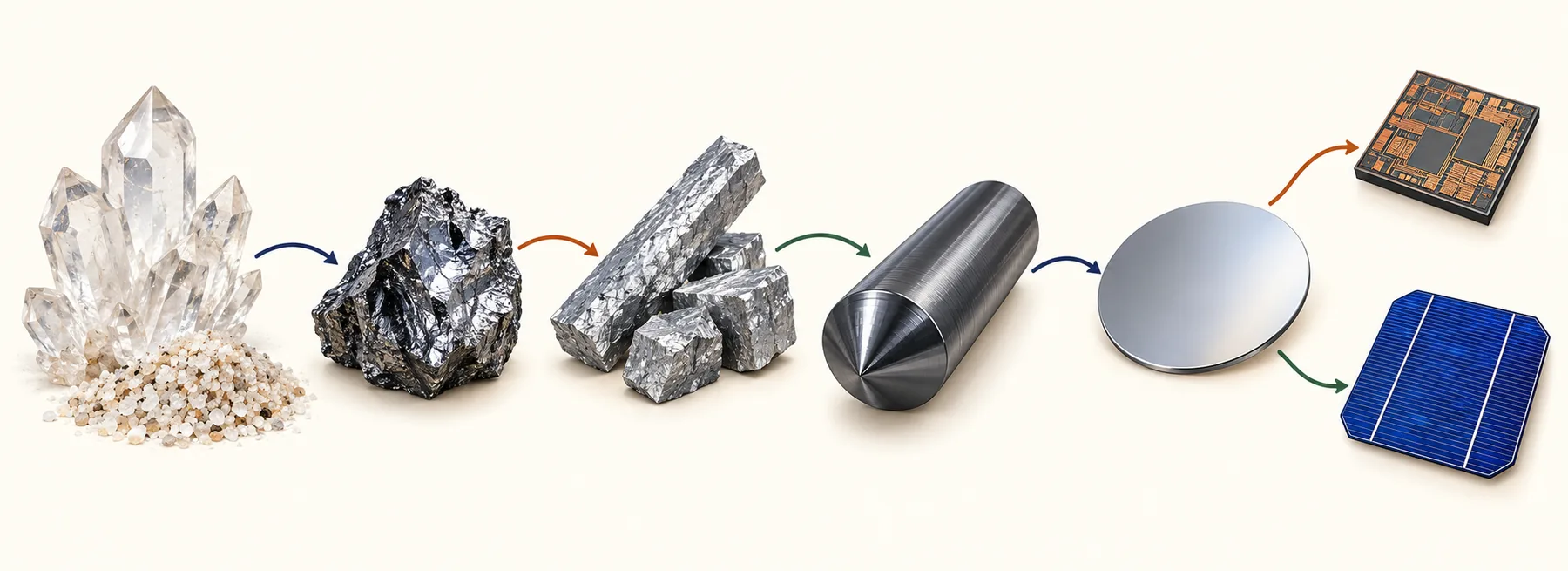
A CPU executes instructions using control logic, registers and arithmetic units. Caches and memory connections help supply its work. Modern CPUs also exploit parallelism.
Explore the deeper guide →A GPU organizes many arithmetic workers, schedulers, registers, caches and memory connections. Parallel work helps only when the algorithm and data movement permit it.
Explore the deeper guide →The same broad semiconductor material can form different ways to hold a bit. SRAM, DRAM and NAND flash trade area, speed, persistence and other properties differently.
Explore the deeper guide →An SSD combines NAND flash with a controller, firmware and interfaces on a board. It is an assembled storage system, not one uniform silicon chip.
Explore the deeper guide →A crystalline-silicon solar cell uses light to generate electrical energy. It branches into a different device process rather than following the complete CPU fabrication route. Other photovoltaic materials also exist.
Explore the deeper guide →Build a small Boolean circuit now, check every input and export Verilog. Then learn what synthesis, physical design and a process design kit add to the evidence.
Explore the deeper guide →Inspect token IDs and vectors, calculate small attention weights, and train a tiny next-token predictor from examples.
Explore the AI Language Lab →Explore the full silicon tree → Build and test logic → All Quantum Sharma learning →
3 LESSONS
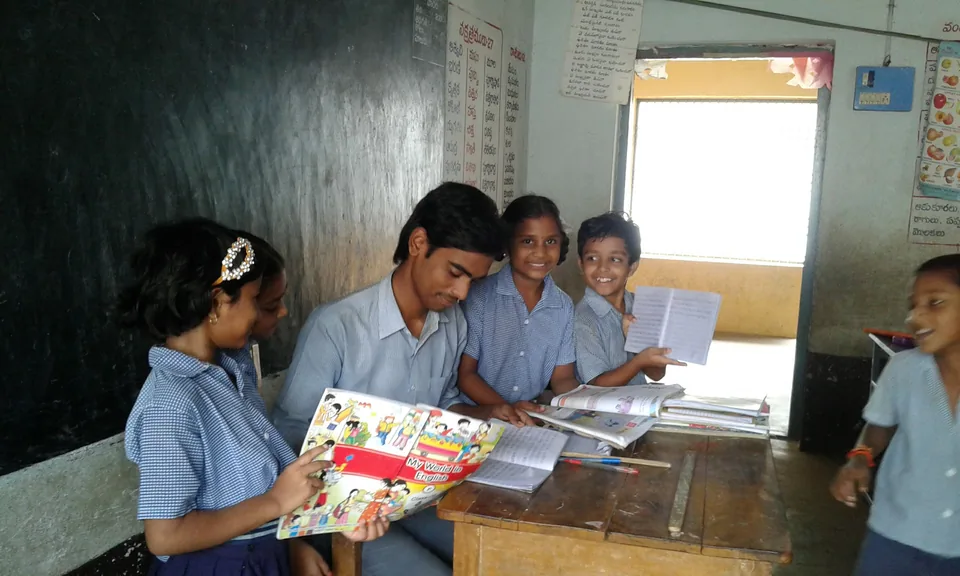
Understand experiments, solve motion and energy problems, and explain how ecosystems work.
Follow this series →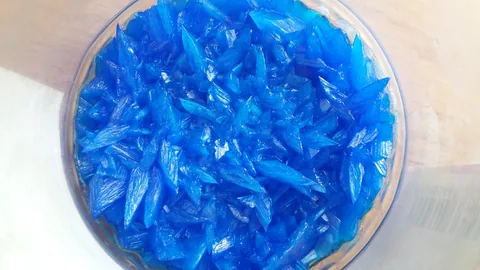
4 LESSONS
Explain the materials around you, separate mixtures and understand how atoms are conserved in reactions.
Follow this series →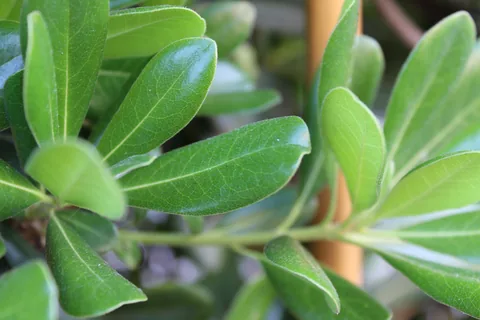
4 LESSONS
Begin with the cell, then connect plant processes, nutrition, respiration and transport.
Follow this series →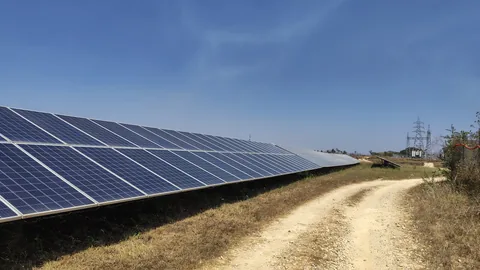
4 LESSONS
Use units, draw motion graphs and connect forces to changes in energy.
Follow this series →4 LESSONS
Follow energy transfers through matter, sound, light and ideal circuits.
Follow this series →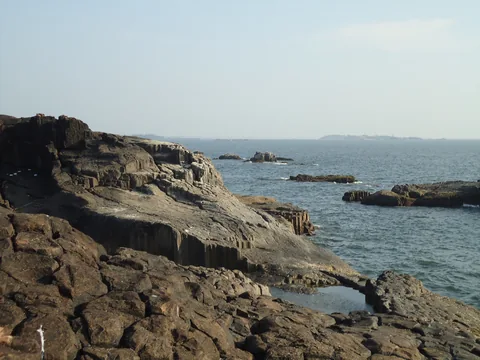
4 LESSONS
Connect a moving planet with geological time, groundwater storage and the soil beneath us.
Follow this series →
4 LESSONS
Follow the forces moving air and sea, interpret rainfall and compare climate records with clear baselines.
Follow this series →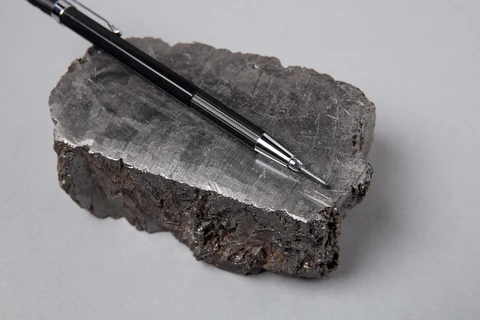
4 LESSONS
Explain pH, periodic patterns, material choices and carbon bonding with worked examples.
Follow this series →Guides 1–24 of 31
Chemistry
BeginnerA colour change can answer a chemical question, but only if we know what the indicator measures.
Learning outcome: Interpret litmus and pH records, distinguish strength from concentration, and explain the limits of a neutralisation claim.
Read the guide →Earth, weather & environment
IntermediateWind is moving matter responding to forces.
Learning outcome: Explain pressure changes with height, compare pressure gradients and use a sea-breeze model without assuming every wind flows straight across a map.
Read the guide →Chemistry
BeginnerA formula is a compact statement about composition.
Learning outcome: Classify particle models, interpret subscripts and coefficients, and calculate atom counts and approximate molecular masses with meaningful units.
Read the guide →Chemistry
IntermediateA fuel, a food ingredient and a soap can all contain carbon while behaving very differently.
Learning outcome: Check simple carbon structures, distinguish a formula from connectivity, recognise two functional groups, and explain the two-part structure of soap.
Read the guide →Biology
BeginnerA living cell is a working system, not just a labelled circle.
Learning outcome: Link organelles with functions, distinguish diffusion from osmosis, and reason about cell size, specialisation and evidence from microscope drawings.
Read the guide →Chemistry
IntermediateRusting and melting both change what we see, but only one forms new substances.
Learning outcome: Interpret reaction evidence, balance simple equations without changing formulas, and explain apparent mass gains or losses by tracing matter across a boundary.
Read the guide →Biology
BeginnerFood does not travel directly from the plate into a muscle.
Learning outcome: Explain the work of the main digestive organs, connect enzyme action with surface area, and interpret simple composition data without turning it into a personal diet prescription.
Read the guide →Earth, weather & environment
IntermediateMountains, ocean ridges and earthquake belts are connected.
Learning outcome: Distinguish compositional and mechanical layers, interpret seismic evidence, compare plate boundaries and calculate a motion rate without pretending it predicts an earthquake.
Read the guide →Science & evidence
BeginnerA pond or garden works through connections between organisms, water, air and soil.
Learning outcome: Explain a food web, distinguish energy flow from nutrient cycling and predict possible effects of a habitat change.
Read the guide →Physics
IntermediateA torch needs a complete conducting path, a source of energy and components that transfer that energy.
Learning outcome: Explain circuit quantities, analyse ideal series and parallel resistor networks, and check charge and energy accounts entirely with paper diagrams.
Read the guide →Physics
IntermediateA trolley can move with balanced forces or stay still while someone pushes it.
Learning outcome: Use force diagrams, distinguish action–reaction pairs from balanced forces, and calculate acceleration and average stopping force under stated assumptions.
Read the guide →Physics
BeginnerA steel tumbler and a cloth bag in the same room can feel different even when their temperatures are equal.
Learning outcome: Explain conduction, convection and radiation, calculate simple heating and mixing cases, and state which energy transfers a model ignores.
Read the guide →Earth, weather & environment
IntermediateThe monsoon is a seasonal circulation system, not a single rain cloud moving across India.
Learning outcome: Explain the circulation beyond a giant sea breeze, distinguish onset from one shower and interpret timing and area-weighted rainfall using explicit denominators.
Read the guide →Physics
BeginnerA printed page, a mirror image and a pencil seen through water all become visible because light reaches the eye.
Learning outcome: Construct plane-mirror ray diagrams, distinguish real and virtual images, predict basic refraction directions and calculate refractive index from speed.
Read the guide →Chemistry
BeginnerA puddle shrinks, a cold bottle becomes wet, and a balloon keeps its shape.
Learning outcome: Explain solids, liquids, gases, diffusion and changes of state, then use a mass balance and a temperature record to test a particle explanation.
Read the guide →Chemistry
BeginnerA cooking vessel, its handle and an electrical cable need different properties.
Learning outcome: Compare material properties, calculate an illustrative alloy composition, and explain how corrosion prevention must match the exposure.
Read the guide →Chemistry
BeginnerClear water can still contain dissolved substances.
Learning outcome: Distinguish solutions, suspensions and colloids, calculate mass percentage, and justify a sequence of separation steps without confusing clarity with purity.
Read the guide →Science & evidence
BeginnerFollow a walk, a trolley and a lifted schoolbag to understand distance, velocity, force, work and energy.
Learning outcome: Calculate distance, displacement, speed, net force and simple work; explain balanced forces and energy transfers.
Read the guide →Earth, weather & environment
IntermediateA coast is a meeting place of moving water, sediment and land.
Learning outcome: Explain these mechanisms, calculate tidal range using a common reference, and balance a coastal sediment account while recognising the limits of a short record.
Read the guide →Biology
BeginnerA tree gains material, captures energy and moves water without a heart.
Learning outcome: Distinguish matter inputs from energy input, explain stomatal trade-offs, and reason about water transport and net gas-exchange measurements.
Read the guide →Biology
IntermediateBreathing moves air, blood moves materials, and cells transform chemical energy.
Learning outcome: Explain ventilation, diffusion and double circulation, then distinguish the rate of moving air or blood from the rate at which tissues actually receive oxygen.
Read the guide →Earth, weather & environment
IntermediateA stone records processes, but its appearance alone does not reveal a complete history.
Learning outcome: Classify formation processes, reconstruct a sequence, calculate an idealised half-life age and recognise what a geological date actually measures.
Read the guide →Science & evidence
BeginnerWhy does a fair test matter? Learn how variables, repeated measurements and alternative explanations turn a sensible guess into a conclusion you can defend.
Learning outcome: You will turn a broad curiosity into a testable question, plan a fair comparison, and distinguish a result from the explanation offered for it.
Read the guide →Earth, weather & environment
BeginnerSoil is a developing system of minerals, organic matter, organisms, air and water.
Learning outcome: Read a soil profile, separate texture from structure, calculate equivalent soil loss and design a fair comparison of protective cover.
Read the guide →No matching guide. Try another word, subject or level, or reset the filters.
Learn through explanations, worked examples and questions with answers. Sources support the lessons and offer a route into deeper study.
Our editorial approach Photograph credits


