

6 LESSONS
Explore culture, places and discovery
Connect heritage and scientific inquiry with the places around you.
Follow this series →ARTS, LANGUAGE AND EVERYDAY LIFE
Explore music, architecture, textiles, poetry and the ways people preserve and share knowledge. Follow objects, stories and skills across India.
6 LESSONS
Connect heritage and scientific inquiry with the places around you.
Follow this series →
3 LESSONS
Examine how line breaks, voices and translation choices create meaning through original worked readings.
Follow this series →3 LESSONS
Learn to read a temple plan, follow musical structure and connect devotional poetry with its languages and communities.
Follow this series →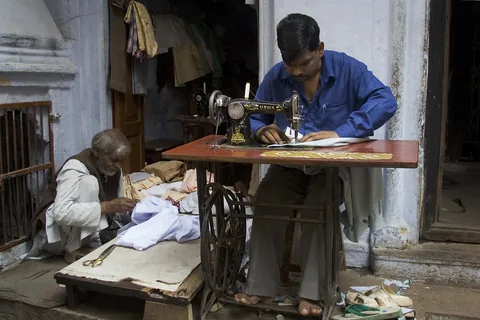
3 LESSONS
Explore inscriptions, maritime exchange and handloom through the evidence left by writing, travel and skilled making.
Follow this series →Guides 1–11 of 11
Heritage, arts & material culture
IntermediateDevotional poetry can make a philosophical relationship feel immediate: a speaker calls, waits, complains, remembers or surrenders.
Learning outcome: Analyse a devotional image, distinguish speaker from historical author, and explain how performance can create shared memory without assuming identical beliefs.
Read the guide →History, literature & society
IntermediateWhy can a sad performance be absorbing rather than simply unpleasant? Rasa theory examines the transformation of represented emotions into aesthetic experience.
Learning outcome: Analyse how a scene is composed, support a rasa interpretation with details, and explain why aesthetic experience differs from an ordinary emotional reaction.
Read the guide →Heritage, arts & material culture
IntermediateA woven cloth preserves decisions made before and during weaving: fibre choice, yarn preparation, colour placement, tension and interlacement.
Learning outcome: Explain a loom’s basic actions, draw a plain-weave repeat, distinguish ikat from surface printing and connect technique to cultural context.
Read the guide →Culture & heritage
BeginnerHeritage is knowledge inherited through buildings, objects, skills and shared practices.
Learning outcome: Explain how four Indian heritage sites solved practical or spiritual needs, and distinguish a material object from the skill that produces it.
Read the guide →Culture & heritage
BeginnerLanguage carries conversation, poetry, work, prayer and memory.
Learning outcome: Distinguish language, script and translation, and explain how cultural knowledge is passed between generations.
Read the guide →Heritage, arts & material culture
IntermediateA listener need not identify every raga to hear musical decisions.
Learning outcome: Explain why a raga exceeds its scale, count teental accurately, and distinguish tempo, note density and rhythmic position.
Read the guide →Heritage, arts & material culture
IntermediateA maritime route is more than a line between two ports.
Learning outcome: Explain a monsoon-dependent trading cycle, reconstruct a port’s connections and test what a cargo or artefact can establish.
Read the guide →Heritage, arts & material culture
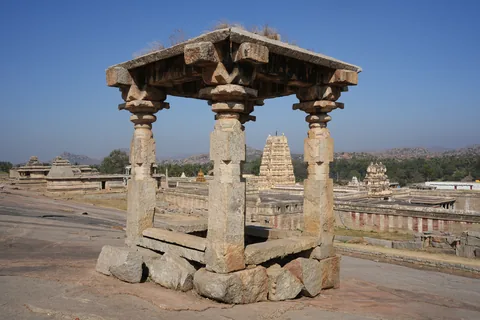
IntermediateA temple can be read as an arrangement of spaces, a structure assembled or carved by skilled workers, and a place carrying sacred meanings.
Learning outcome: Interpret a simple temple plan, compare sanctum towers and gateways, and support a stylistic judgment with several visible features.
Read the guide →Heritage, arts & material culture
IntermediateA few words cut into stone can preserve a donor’s name, a royal order or a claim about a repaired reservoir.
Learning outcome: Read a model inscription in layers, distinguish regnal dates from calendar dates, and assess a royal claim without discarding its historical value.
Read the guide →History, literature & society
IntermediateA poem can make an ordinary kettle or a timetable newly noticeable.
Learning outcome: Explain imagery, repetition, rhythm and line breaks through two original poems, and defend a reading using specific textual details.
Read the guide →History, literature & society
IntermediateTranslating a notice, a story or a science explanation requires decisions about more than vocabulary.
Learning outcome: Distinguish translation from transliteration, analyse register and context, compare two solutions to a translation problem, and check a practical bilingual notice.
Read the guide →No matching guide. Try another word, subject or level, or reset the filters.
Learn through explanations, worked examples and questions with answers. Sources support the lessons and offer a route into deeper study.
Our editorial approach Photograph credits
