
The core idea
Chapter 7 places knowledge of Shri Krishna at the centre of the inquiry. The world and living beings are understood in relation to him, while devotion can begin from need, curiosity or knowledge and deepen beyond a narrow bargain.
7.1: knowing through listening and yoga
At the opening, Shri Krishna asks Arjuna to hear how a mind directed towards him, practising yoga under his shelter, may know him fully. Knowledge here is therefore connected with a relationship and a way of life, not merely collecting definitions. Prabhupada’s commentary reads this as knowing Shri Krishna through devotional engagement. That is a named devotional interpretation, while the verse’s invitation to listen gives every reader a clear starting point for following the chapter.
Sources: Bhaktivedanta Book Trust: Bhagavad-gita As It Is: Gita 7.1 ↗
7.4–5: two kinds of prakriti
Verse 7.4 names an eightfold nature, including earth, water, fire, air, space, mind, intellect and ego. Verse 7.5 introduces a higher nature associated with living beings. In Prabhupada’s explanation these are the Lord’s material and living energies, dependent on him. The list belongs to a philosophical and theological account; it is not a modern periodic table. Ask what distinction the passage draws between the resources of experience and the living beings involved in it.
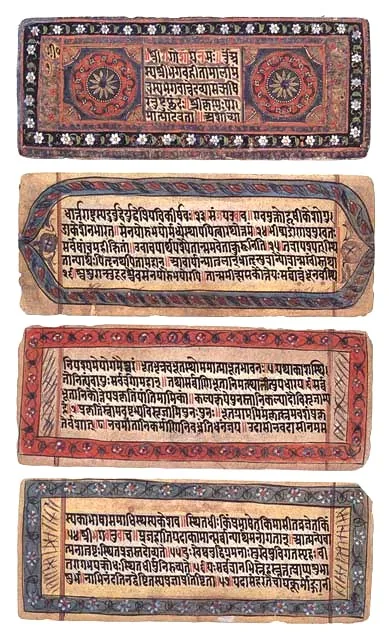

Sources: Bhaktivedanta Book Trust: Bhagavad-gita As It Is: Gita 7.4 ↗ · Bhaktivedanta Book Trust: Bhagavad-gita As It Is: Gita 7.5 ↗
7.8: a familiar experience becomes a reminder
In 7.8 Shri Krishna points to the taste of water, the light of sun and moon, the sacred syllable Om and other familiar powers. These examples connect knowledge of the Lord with what a listener already encounters. Prabhupada explains them through divine energies. Their function in the chapter is devotional recognition: the familiar can turn attention towards its source. Read them within that purpose rather than claiming that a description of taste replaces scientific investigation of water.
Sources: Bhaktivedanta Book Trust: Bhagavad-gita As It Is: Gita 7.8 ↗
7.14: the difficulty of crossing maya
Verse 7.14 calls the Lord’s maya, formed of the gunas, difficult to cross and connects crossing it with taking refuge in him. Maya in this passage is not just a label for a visual trick or an excuse to dismiss other people’s pain. It concerns the binding power of nature within the chapter’s religious explanation. The proposed answer is a transformed relation to the Lord, so self-sufficient pride is questioned alongside mistaken understanding.
Sources: Bhaktivedanta Book Trust: Bhagavad-gita As It Is: Gita 7.14 ↗
7.16 and 7.19: beginnings and deepening
Verse 7.16 names distressed people, seekers of material benefit, the curious and the knowledgeable among those who turn towards Shri Krishna. These are different starting motives, not a tool for shaming a neighbour. In 7.19 knowledge culminates in refuge in Vasudeva, described as rare. Read the movement from an immediate wish towards a more comprehensive relation with the Divine. Prabhupada’s commentary emphasises devotion that is no longer limited to obtaining a private reward.
Sources: Bhaktivedanta Book Trust: Bhagavad-gita As It Is: Gita 7.16 ↗ · Bhaktivedanta Book Trust: Bhagavad-gita As It Is: Gita 7.19 ↗
Original example: why am I asking?
Rahul first visits a reading group while anxious about an exam. Later he returns because he wants to understand a verse even when no exam is near. List the change without declaring that one visit made him enlightened: his immediate need opened a question, and the question now has value beyond the immediate result. He may keep asking for help while also listening carefully. This invented example illustrates changing motives; it does not assign Rahul a permanent spiritual category or promise any examination outcome.
PUT IT INTO PRACTICE
Read, distinguish and apply
- Read 7.1 and identify who speaks, who listens and what kind of knowing is promised in the passage.
- Make two columns for 7.4–5. Record the eightfold nature in one and the living nature in the other; label this a textual classification.
- Compare 7.16 and 7.19. Write one difference between an immediate motive and devotion directed beyond that immediate benefit.
Check your understanding
Why is the eightfold list not being taught as modern chemistry?
It includes mind, intellect and ego as well as physical elements, serving a philosophical account of the Lord’s nature. Its purpose and categories differ from chemical classification.
What does the example of water contribute?
It links devotional recognition with a familiar experience. The reader can notice the experience and its theological meaning without replacing a scientific account of how water works.
Should the four seekers become permanent labels for people?
No. The passage identifies motives for turning towards the Lord, and the chapter also describes deepening knowledge. People’s motives can be examined without claiming to know their whole spiritual state.
What would be lost by translating maya here as only “nothing matters”?
The verse’s account of the gunas, bondage and refuge in the Lord would disappear. It addresses a spiritual difficulty rather than instructing the reader to dismiss life.