
The core idea
The chapter presents selected manifestations as aids to recognising the Lord, while its conclusion prevents the list from being mistaken for an exhaustive definition.
Knowledge moves toward devotion
At 10.8–11, Krishna describes Himself as the source of all and joins this recognition with devotion, conversation and the gift of understanding. The Lord is not presented merely as one impressive item within a larger collection. The opening establishes the relationship that the later examples illustrate. In the cited Vaishnava source, knowing and loving Krishna belong together; collecting facts about the chapter while missing that relation would leave its stated purpose unexplained.
Sources: Bhagavad Gita 10:8: BBT VedaBase, A. C. Bhaktivedanta Swami Prabhupada ↗
Arjuna asks how remembrance can continue
Arjuna’s question in 10.16–18 is practical within the dialogue: in which forms or aspects should he contemplate Krishna? He asks for a fuller description because hearing has increased his interest. Krishna answers with prominent examples rather than claiming that a finite catalogue can contain the whole divine reality. The question and answer therefore belong together: the list is addressed to a learner seeking sustained remembrance, not to a competition for naming the most impressive things.
Sources: Bhagavad Gita 10:17: BBT VedaBase, A. C. Bhaktivedanta Swami Prabhupada ↗ · Bhagavad Gita 10: BBT VedaBase, A. C. Bhaktivedanta Swami Prabhupada ↗
Begin the catalogue with the Self
Verse 10.20 identifies Krishna with the Self present in the hearts of beings and with their beginning, middle and end. This opening makes the catalogue more than an outward sightseeing tour. The chapter’s scope includes the inward ground of living existence as well as visible lights, mountains and rivers. Different commentarial traditions explain self and Lord with distinct philosophical commitments; a beginner should retain the exact reference and identify the interpretation being read.
Sources: Bhagavad Gita 10:20: BBT VedaBase, A. C. Bhaktivedanta Swami Prabhupada ↗
Read examples as a connected pattern
The catalogue ranges across divine figures, natural phenomena, sacred learning, sound and human qualities. At 10.25, for example, japa is singled out among sacrifices; at 10.31 the Ganges appears among rivers. Rather than converting each entry into an unrelated slogan, ask what the repeated movement does: something familiar directs attention beyond itself. Reading several examples together also shows why a single modern category, such as nature appreciation, cannot describe the whole chapter.
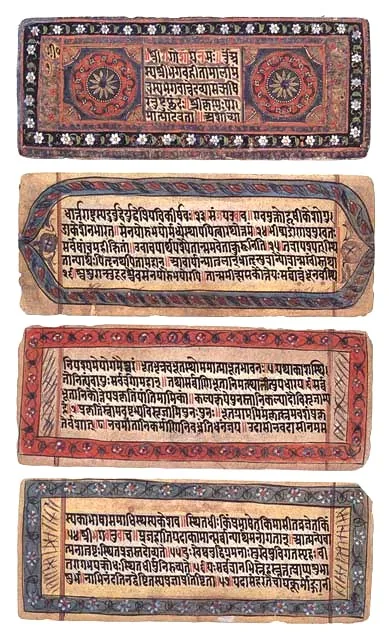

Sources: Bhagavad Gita 10: BBT VedaBase, A. C. Bhaktivedanta Swami Prabhupada ↗
The conclusion keeps the list open
Verses 10.40–42 say that the manifestations are not exhausted by what has been narrated. Splendour, power and beauty point toward a portion of divine radiance; the final statement returns to the support of the entire universe. The direction is from selected indications toward their sustaining source, not from a finite list to a claim that everything else is irrelevant. Read this ending before using the catalogue to make exclusions the passage itself does not establish.
Sources: Bhagavad Gita 10:41: BBT VedaBase, A. C. Bhaktivedanta Swami Prabhupada ↗ · Bhagavad Gita 10:42: BBT VedaBase, A. C. Bhaktivedanta Swami Prabhupada ↗
Worked example: looking beyond the photograph
Original learning example: Ravi photographs a river and writes that possessing the photograph means he has understood its sacred importance. His friend asks him to read the chapter’s actual river reference and its conclusion. A better study note separates three things: what Ravi observed, what the text says, and how that passage affects his remembrance. He can also care for the riverbank without claiming that his photograph contains the Lord. The example teaches the limits of an illustration; it does not add a new manifestation to Krishna’s list or make a historical claim about that river.
PUT IT INTO PRACTICE
Make a chapter reading map
- Write Arjuna’s question in your own words and identify the request in 10.17.
- Choose three actual examples from the chapter. Keep their verse references and identify what kind of example each is.
- Read 10.40–42 and revise a sentence that wrongly treats your three examples as a complete list.
Check your understanding
Why does the catalogue follow Arjuna’s question?
The question asks for ways to contemplate and remember Krishna. It supplies the purpose for the examples instead of leaving them as isolated facts.
What makes 10.20 important for the whole list?
It includes the inward Self and the life of beings, preventing the chapter from becoming only a tour of outward grandeur.
Is the list exhaustive?
No. Its ending expressly moves from selected manifestations to the Lord’s inexhaustible reality and support of the world.
Does an original example become scripture?
No. Label it as an application and preserve the difference between an observed object, a cited passage and your reflection.