
The core idea
Chapter 6 presents yoga as a sustained discipline involving conduct, moderation, attention and devotion. Arjuna’s difficulty is heard rather than ignored, and Shri Krishna answers with practice, detachment and reassurance.
6.1: yoga begins with the attitude to work
Chapter 6 begins by calling the person who performs necessary work without depending on its fruit a renunciant and a yogi. It contrasts that inward discipline with merely giving up ritual fire or activity. The opening continues chapter 5’s concern: an outward sign cannot by itself establish freedom from attachment. Meditation therefore enters a conversation already shaped by responsible action. Read the chapter’s quiet practices alongside its opening account of how one acts.
Sources: Bhaktivedanta Book Trust: Bhagavad-gita As It Is: Gita 6.1 ↗
6.17: a sustainable setting for practice
In 6.17 Shri Krishna joins yoga with a regulated pattern of eating, recreation, work, sleep and wakefulness. The important connection is that spiritual attention has a daily setting; it is not isolated from ordinary habits. For a beginner, notice the balance of these activities rather than turning the verse into a competition in deprivation. This lesson explains the passage’s place in the teaching and does not prescribe a diet, sleep duration or treatment.
Sources: Bhaktivedanta Book Trust: Bhagavad-gita As It Is: Gita 6.17 ↗
6.26 and 6.35: returning is part of practice
Verse 6.26 describes bringing the wandering mind back under discipline. When Arjuna protests that the mind is difficult to restrain, 6.35 acknowledges that difficulty and joins abhyasa, repeated practice, with vairagya, detachment. The response does not pretend that one command produces instant mastery. These two terms belong together: regular returning develops steadiness, while loosening attachment addresses what repeatedly pulls attention away. Notice the dialogue’s movement from instruction to an honestly stated obstacle.
Sources: Bhaktivedanta Book Trust: Bhagavad-gita As It Is: Gita 6.26 ↗ · Bhaktivedanta Book Trust: Bhagavad-gita As It Is: Gita 6.35 ↗
6.40: what about an unfinished effort?
Arjuna worries about the seeker who begins but does not complete yoga. In 6.40 Shri Krishna reassures him that one engaged in the good does not meet spiritual destruction, and the following discussion concerns the continuation of a seeker’s journey. This is a religious answer within the Gita’s account of life and rebirth. It is not a promise that every ordinary project will succeed. The question protects a beginner from assuming that imperfect practice is automatically worthless.
Sources: Bhaktivedanta Book Trust: Bhagavad-gita As It Is: Gita 6.40 ↗
6.47: concentration opens towards devotion
The final verse praises the yogi whose inner being rests in Shri Krishna and who worships with faith. Bhaktivedanta Swami Prabhupada’s commentary stresses loving service in explaining this conclusion. The chapter therefore cannot be reduced to a neutral concentration exercise alone. Its discussion of action, disciplined living, attention and perseverance culminates in a devotional relationship. Keep that ending visible when using a small attention exercise as a learning aid; the aid is not the whole spiritual path.
Sources: Bhaktivedanta Book Trust: Bhagavad-gita As It Is: Gita 6.47 ↗
Original example: reading one paragraph attentively
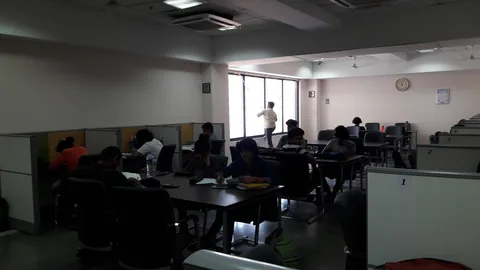
Sana chooses one short paragraph for careful reading. After two sentences she notices that she is planning tomorrow’s tasks. She returns to the sentence, then writes its main point after finishing. Instead of counting every wandering thought as failure, she records whether she noticed and returned. If the paragraph remains difficult, she asks for an explanation. This classroom exercise makes the pattern of returning observable. It is not a substitute for the chapter’s meditation discipline or a test of anyone’s spiritual worth.

PUT IT INTO PRACTICE
Read, distinguish and apply
- Read 6.1, 6.17 and 6.35. Give each passage a distinct heading rather than treating them as the same instruction.
- Try the short reading exercise. Record the passage, one distraction noticed and how you returned; do not create a spiritual score.
- Read 6.40 and 6.47. Distinguish reassurance about effort from the devotional conclusion of the chapter.
Check your understanding
Why begin a meditation chapter with action?
Verse 6.1 links yoga with doing necessary work without depending on its fruit. This connects meditation to an already developing discipline of motive and conduct.
How do practice and detachment address different parts of the difficulty?
Practice repeatedly brings attention back; detachment loosens the pull of its objects. The verse pairs them, so repeated effort alone is not the entire explanation.
Does 6.40 guarantee success in every exam or project?
No. It answers Arjuna’s concern about the spiritual seeker. Extending that reassurance to every worldly outcome would change the question the verse addresses.
Why retain 6.47 when explaining attention?
It makes faith and devotion to Shri Krishna explicit. Omitting it could make the chapter sound like only a study technique, leaving out its stated spiritual orientation.