
The core idea
The universal-form episode joins wonder with terror and ends with devotion, action and freedom from hostility; it is not merely a description of a beautiful cosmic picture.
From hearing to the request to see
After hearing of Krishna’s divine manifestations, Arjuna asks in 11.1–4 to see the universal form if the Lord considers him capable. The request is therefore a response to teaching already received. He does not command a spectacle for entertainment. Read the respectful condition in his request: a learner can ask sincerely while acknowledging that the desired disclosure is not under his own control. This narrative setting shapes the vision that follows.
Sources: Bhagavad Gita 11: BBT VedaBase, A. C. Bhaktivedanta Swami Prabhupada ↗
The sight is granted, not manufactured
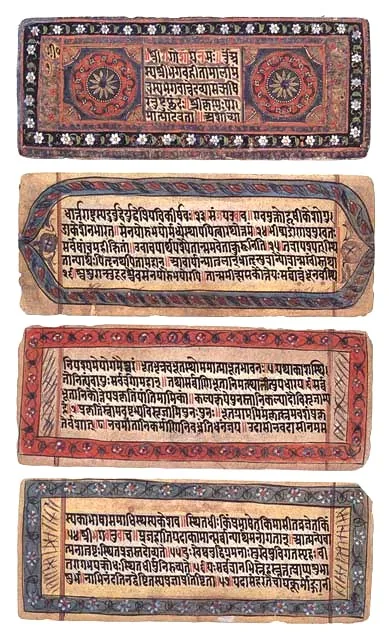
In 11.8 Krishna says ordinary sight is insufficient and grants divine vision. Sanjaya then narrates the disclosure before Arjuna speaks in wonder. The episode presents many beings and forms together in a radiance beyond an ordinary view. This is a sacred narrative about a granted vision, not an instruction for generating an image with technology or a test that readers must reproduce. A visual illustration can point toward the story without claiming to be that vision.

Sources: Bhagavad Gita 11:8: BBT VedaBase, A. C. Bhaktivedanta Swami Prabhupada ↗ · Bhagavad Gita 11: BBT VedaBase, A. C. Bhaktivedanta Swami Prabhupada ↗
Wonder becomes a confrontation with Time
As the vision develops, Arjuna sees destruction as well as splendour. At 11.31 he asks who this terrifying form is; 11.32 answers with Time and the destruction of the assembled forces. Verse 11.33 then addresses Arjuna’s role in the narrated battle. Keep that particular setting visible. The passage cannot be detached into a general licence for someone to announce that a personal enemy deserves violence because divine destiny supposedly guarantees it.
Sources: Bhagavad Gita 11:32: BBT VedaBase, A. C. Bhaktivedanta Swami Prabhupada ↗
A changed understanding changes address
In 11.41–44 Arjuna recalls the familiarity with which he addressed Krishna as a companion and asks forgiveness. The change is not simply fear of punishment; he now understands his relationship differently after the disclosure. His language combines reverence with comparisons to father, friend and beloved relationships. Read it as part of a response to Krishna rather than a rule that friendship itself is wrong or that every human relationship must be replaced by distance.
Sources: Bhagavad Gita 11:41-42: BBT VedaBase, A. C. Bhaktivedanta Swami Prabhupada ↗ · Bhagavad Gita 11: BBT VedaBase, A. C. Bhaktivedanta Swami Prabhupada ↗
The chapter returns to a way of living
Arjuna asks for a form in which he can regain steadiness, and the narrative returns from the terrifying vision. The closing movement, 11.54–55, connects approaching Krishna with undivided devotion. Verse 11.55 gathers work for Him, the highest aim, devotion, non-attachment and absence of hostility toward beings. The conclusion matters: even after the overwhelming display, the instruction returns to how the devotee is directed and how the devotee lives, not to the ability to repeat a spectacle.
Sources: Bhagavad Gita 11:55: BBT VedaBase, A. C. Bhaktivedanta Swami Prabhupada ↗
Worked example: an image is not the encounter
Original learning example: a study group sees an artwork of the universal form. One learner lists its bright colours and calls the chapter cheerful; another notices the fearful imagery and calls it only despair. They revise their reading by placing five events in order: request, granted sight, wonder, Time and the final instruction. The artwork then becomes a prompt for returning to the passage. It cannot prove that anyone has had Arjuna’s experience. This exercise uses a representation to improve reading while preserving the difference between a sacred narrative and a contemporary picture.
PUT IT INTO PRACTICE
Make a chapter reading map
- Make a five-stage narrative map from 11.1–8, the vision, 11.32, the prayer and 11.55.
- Mark where Arjuna’s response changes. Write what in the narrated encounter explains the change.
- Read the final verse and describe one quality it asks of the devotee. Keep your application separate from a quotation.
Check your understanding
Why is the divine-vision statement important?
It identifies the encounter as something granted within the sacred narrative, not ordinary eyesight or a reproducible visual trick.
Is the universal form only reassuring?
No. Arjuna experiences wonder and fear; the confrontation with Time makes destruction part of the episode.
May 11.32 be used as permission for personal violence?
No. Preserve the particular narrative setting and do not invent divine authority for a present-day personal grievance.
Why finish the lesson with 11.55?
It reconnects the vision with devotional action, non-attachment and non-hostility instead of leaving the chapter at spectacle alone.