
FREE LEARNING SERIES
Education, literature and public life
Learn through Savitribai Phule, Ambedkar, Tagore and Sarojini Naidu: access, rights, imagination and collective action.
4 lessons · Learn at your own pace
Begin the first lesson →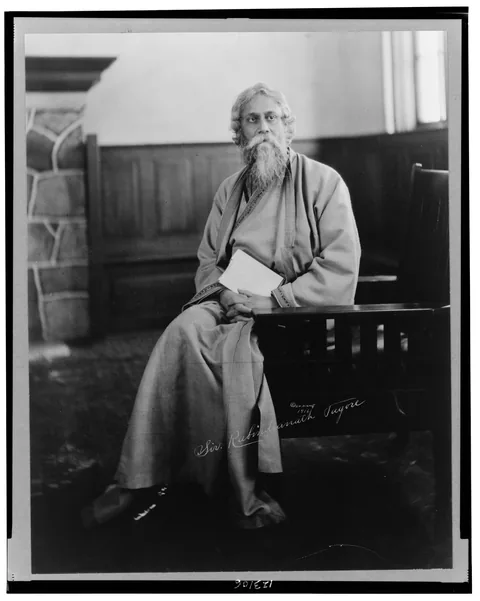

Learn, practise, explain
Try the exercise before reading its explanation. Answer the self-check questions in your own words, then compare your reasoning with the answers. Revisit any difficult section before moving on. No account or payment is needed.
- 01
Savitribai Phule: education and equality
Savitribai Phule helped make education a practical challenge to social exclusion. Studying her as a teacher, organiser and writer reveals how a right becomes meaningful through classrooms, teaching and sustained public effort.
Learning outcome: Explain how exclusion can survive an open-door policy, distinguish educational access from learning, and use evidence to assess a reformer’s contribution without reducing a movement to one person.
Open lesson → - 02
B. R. Ambedkar: law, learning and democracy
Bhimrao Ramji Ambedkar connected scholarship with organised struggles against caste exclusion and with the design of democratic institutions. His biography helps explain why a constitution needs both carefully written rules and people willing to uphold equal dignity.
Learning outcome: Distinguish voting from the wider practice of democracy, explain why rights need remedies, and evaluate a rule using both its wording and its effects.
Open lesson → - 03
Rabindranath Tagore: literature, freedom and learning
Tagore joined imaginative writing with practical experiments in education. Study how a poem can question habits, how translation changes a work’s audience, and how a school can connect knowledge with lived experience.
Learning outcome: Interpret one literary image with evidence, distinguish a text from its translation, and design a small activity that joins observation with expression.
Open lesson → - 04
Sarojini Naidu: poetry, persuasion and public life
A poet can shape how people imagine a place; an organiser can help people act together. Naidu’s life lets us examine both forms of public communication without confusing a poem, a speech and a historical record.
Learning outcome: Explain how poetic voice works, assess a public claim, and connect literary and political milestones without assuming that one automatically caused the other.
Open lesson →