
The core idea
Ramanuja taught a unity in which individual selves and the world remain real and inseparably dependent on Bhagwan Narayana. Knowledge, devoted contemplation and divine grace belong to a path of liberation that preserves the self’s relationship with the Lord.
A teacher remembered through places and tradition
Ramanuja is a major teacher of Sri Vaishnava Hinduism. Traditional chronology dates his life to 1017–1137. Sriperumbudur is honoured as his birthplace. Sri Vaishnava accounts describe his study with Yadava Prakasha in the Kanchipuram region and their disagreements over the meaning of Vedantic passages. He later became a renunciant and made Srirangam a major centre of his teaching and religious leadership. These settings placed philosophical debate within a life of worship, learning and community organisation. His central concern was the relation between the supreme Lord, individual selves and the world. The account he developed gave enduring expression to Vishishtadvaita, a form of Vedanta in which unity includes real distinction.
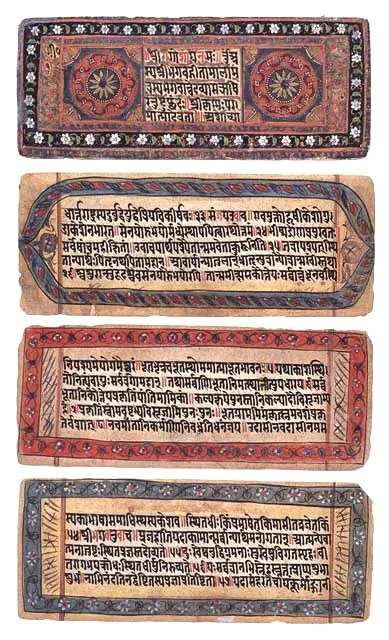

Sources: Chinna Jeeyar: Ramanuja millennium musical offering at Sriperumbudur ↗ · SriMatham: Sri Vaishnava teacher lineage ↗ · Koyil T. S. Sundara Rajan: The Great Temple of Srirangam (1996) ↗ · Ramanuja: Sri-bhashya, George Thibaut’s 1904 translation — Project Gutenberg ↗
Learning within a living community
Ramanuja’s intellectual inheritance included Yamunacharya, also called Alavandar. Traditional accounts say they did not meet while Yamuna was alive; the connection passed through teachers in his lineage. Among Ramanuja’s guides were Periya Nambi and Tirukkachchi Nambi. His close disciples included the scholar Kurattazhvan and his nephew Mudali Andan, remembered for supporting his work at Srirangam. This was a network of teachers, interpreters and organisers. Its religious world joined Sanskrit learning with devotion nourished by the Tamil hymns of the Alvars. Ramanuja’s opening to the Sri-bhashya also acknowledges an inherited interpretation associated with Bodhayana and earlier teachers. His authority combined fidelity to this inheritance with the ability to explain its claims and answer philosophical opponents.
Sources: Koyil T. S. Sundara Rajan: The Great Temple of Srirangam (1996) ↗ · S. S. Raghavachar: Sri-bhashya introduction — historical essay ↗ · Ramanuja: Sri-bhashya, George Thibaut’s 1904 translation — Project Gutenberg ↗
Three works, three ways of approaching the teaching
The Sri-bhashya is Ramanuja’s extensive commentary on the Brahma Sutras. It explains terse propositions, considers objections and defends an account of Brahman, spiritual practice and liberation. The Vedarthasangraha instead draws together Upanishadic teaching without commenting continuously on a single Upanishad. Its task is reconciliation: statements of difference, unity and divine indwelling must form a coherent account. His Bhagavad Gita commentary follows the dialogue between Shri Krishna and Arjuna, explaining action, knowledge and devotion in relation to the final goal. The three works therefore share a philosophical direction while using different forms of argument. One follows a sequence of sutras; another synthesises scriptural passages; the third interprets teaching within a dialogue about how a person should live and seek liberation.
Sources: Swami Adidevananda: overview of Vedarthasangraha — historical essay ↗ · S. S. Raghavachar: Sri-bhashya introduction — historical essay ↗ · Ramanuja: Sri-bhashya, George Thibaut’s 1904 translation — Project Gutenberg ↗ · IIT Kanpur Gita Supersite: Ramanuja’s Sanskrit commentary on Bhagavad Gita 15.7 ↗ · IIT Kanpur Gita Supersite: Ramanuja’s Sanskrit commentary on Bhagavad Gita 18.66 ↗
What qualified nonduality means
Vishishtadvaita is commonly translated as qualified nonduality. In Ramanuja’s account Brahman is the supreme personal reality, Bhagwan Narayana, possessing auspicious qualities. Conscious selves and nonconscious matter are real, yet their existence depends on Brahman. They are not separate, self-sufficient ultimate powers. The unity is therefore a unity that includes genuine distinctions. “Qualified” means that Brahman is understood together with the inseparably dependent selves and world, rather than apart from all such distinctions. A person remains a knowing subject; a material object does not become a conscious person. Liberation fulfils the self’s relationship with the divine instead of erasing that self into nonexistence. This is Ramanuja’s interpretation, not a definition accepted identically by every Vedanta school.
Three realities and their relation
| Term | Meaning | Relation |
|---|---|---|
| Ishvara / Brahman | Bhagwan Narayana, supreme conscious reality | Supports and indwells all |
| Cit | Conscious individual selves | Real and dependent on Brahman |
| Acit | Nonconscious matter | Real and dependent on Brahman |
Sources: Ramanuja: Sri-bhashya, George Thibaut’s 1904 translation — Project Gutenberg ↗ · IIT Kanpur Gita Supersite: Ramanuja’s Sanskrit commentary on Bhagavad Gita 15.7 ↗
Worked example: one whole with real distinctions
Ramanuja explains the relation through body and indwelling Self: the world and individual selves constitute Brahman’s body, supported and governed by their inner Self. For him this is a metaphysical relationship, more than a decorative comparison. As a first learning exercise, consider a person using a hand to write. Hand and conscious agent are distinguishable, but the action belongs to one embodied person. Now identify the limit: Brahman is not a large human organism, and divine support is not identical to nerves controlling muscles. The example only helps us see how distinction need not mean complete separation. Ramanuja’s argument also maintains that defects belonging to a dependent body do not become defects in Brahman’s essential nature. The analogy introduces the claim; it does not prove it.
Sources: Ramanuja: Sri-bhashya, George Thibaut’s 1904 translation — Project Gutenberg ↗
Worked example: interpreting unity without losing the self
Suppose a reader encounters the Upanishadic teaching tat tvam asi, often rendered “that you are.” The reader concludes, “My everyday ego must be the independent ruler of everything.” Ramanuja would reject that conclusion. His interpretation connects the individual self with Brahman as its indwelling ruler; language about a dependent being can reach the deeper reality that sustains it. Work through the reasoning: identify the individual subject, identify its dependence, then distinguish the inner ruler from the limited ego. The statement of unity should not cancel passages teaching real difference and divine lordship. This reading exercise shows why philosophical interpretation requires several passages in conversation. A translation of three words alone cannot settle the entire dispute between Vedanta schools.
Sources: Ramanuja: Sri-bhashya, George Thibaut’s 1904 translation — Project Gutenberg ↗
Bhakti as sustained understanding and love
For Ramanuja, knowledge of the self and God develops towards devoted contemplation. Bhakti is not simply a passing feeling or an occasional declaration of belief. Understanding gives devotion an object; repeated remembrance, worship and disciplined action give it continuity. In his Gita commentary on 15.7, the individual self is enduring, while bondage constricts its knowledge through karma. Spiritual practice therefore concerns the transformation of an existing self, not the manufacture of a soul that previously did not exist. The goal is release from bondage and the joyful fulfilment of its relation to the Lord. Study and devotion need not compete: careful understanding can deepen love, while devotion can give study patience, purpose and humility.
Sources: Ramanuja: Sri-bhashya, George Thibaut’s 1904 translation — Project Gutenberg ↗ · IIT Kanpur Gita Supersite: Ramanuja’s Sanskrit commentary on Bhagavad Gita 15.7 ↗
Worked example: surrender and responsibility
Prapatti or sharanagati means taking refuge in the Lord. Ramanuja’s Gita commentary on 18.66 explains surrender with relinquishment of possessiveness, claims to independent agency and attachment to results, while duties are performed as worship. It also discusses refuge in divine compassion when accumulated obstacles seem overwhelming. Consider a devotee responsible for preparing a shared meal. Saying “God will do everything” and abandoning the kitchen confuses dependence with negligence. A better application is to prepare carefully, accept assistance, acknowledge others’ contributions and relinquish the demand for personal praise. The work still requires attention, but its motivation changes. In this example, service expresses dependence through willing participation, and gratitude takes the place of claiming complete personal ownership of the result.
Sources: IIT Kanpur Gita Supersite: Ramanuja’s Sanskrit commentary on Bhagavad Gita 18.66 ↗
A legacy of commentary, worship and learning
Ramanuja’s legacy continues through commentaries, temple worship and the transmission of teaching. Sri Vaishnava institutions cultivate Ubhaya Vedanta, bringing Sanskrit and Tamil learning into a shared religious life. The Ubhaya Vedanta Acharya Peetham described by Chinna Jeeyar’s institution supports instruction and preservation of this inheritance. Such work extends the communal setting in which Ramanuja taught: students receive texts, learn their interpretation and participate in worship. The philosophical account gives these activities a connected purpose. A real self can learn and love; a real world provides the setting for service; dependence on Bhagwan Narayana gives devotion its direction. Liberation completes that relationship through freedom from bondage and service of the Lord. Ramanuja’s lasting contribution unites reasoning about reality with a life directed towards devotion.
Sources: Chinna Jeeyar: Ubhaya Vedanta Acharya Peetham ↗ · Ramanuja: Sri-bhashya, George Thibaut’s 1904 translation — Project Gutenberg ↗
PUT IT INTO PRACTICE
Build a connected account
- Write one sentence each about Brahman, conscious selves and matter; explain how they are related.
- Use the writing-hand example, then state two ways the analogy cannot literally describe Brahman.
- Choose one responsibility and describe how careful action, humility and surrender could coexist.
Check your understanding
How do the Sri-bhashya and Vedarthasangraha differ?
The Sri-bhashya comments on the Brahma Sutras in sequence and answers objections. The Vedarthasangraha brings Upanishadic passages together to explain their coherent meaning.
Does qualified nonduality make the world unreal?
No. Selves and matter are real, but inseparably dependent on Brahman rather than independent ultimate realities.
Why is the body–Self example limited?
It helps explain distinction within dependence, but Brahman is not a giant organism with human bodily limitations.
Does surrender excuse neglecting a duty?
No. In the interpretation discussed here, duties can become worship while possessiveness and attachment to results are relinquished.