
The core idea
Janaki Ammal contributed to plant cytogenetics, co-authored a major chromosome atlas and helped develop botanical research and documentation in India. Her work links cultivated plants with the wider diversity of plant life.
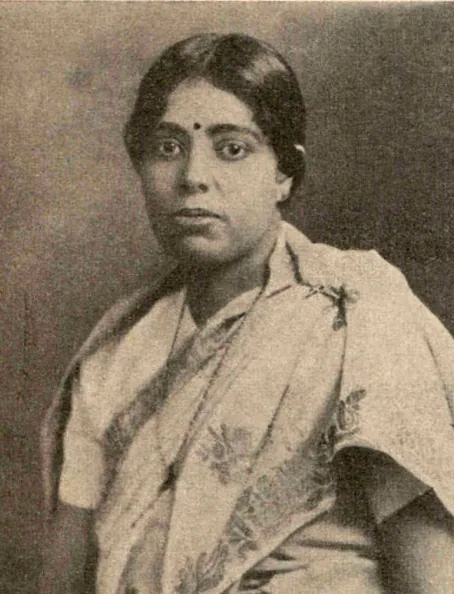

1. A botanist working across institutions
Edavaleth Kakkat Janaki Ammal was born in Thalassery in 1897 and died in 1984. She studied botany in Madras, taught at Women’s Christian College and continued graduate study at the University of Michigan with scholarship support. She obtained a master’s degree in 1925 and a doctorate in 1931. Training and access to research communities were important parts of her scientific development.
Her career unfolded while gender and caste shaped access to education and employment. Studying her achievements helps make women’s scientific work visible, but a biography should not suggest that determination alone removes institutional barriers. Scholarships, colleagues, laboratories and opportunities also matter. Her research deserves attention for what it discovered and organised, not merely because her path was unusual.
Sources: Botanical Survey of India: E. K. Janaki Ammal, ENVIS 20(2), 2015, page 11 ↗ · University of Michigan: Janaki Ammal, Barbour Scholar ↗
2. What chromosome study asks
Chromosomes are structures containing genetic material. Cytology studies cells; cytogenetics connects chromosome structure and behaviour with inheritance. Researchers can examine chromosome numbers, compare related plants and investigate how chromosomes behave during reproduction. A chromosome count is therefore a clue about a plant’s genetic organisation, not a complete description of every characteristic.
A chromosome set contains one of each basic chromosome type. Diploid cells contain two sets; a tetraploid plant has four sets. Polyploidy means having more than two complete sets. It is common in plant evolution and important in the study of cultivated plants. Extra complete sets are different from one extra chromosome, just as duplicating a whole book collection differs from adding one book. More chromosomes do not automatically mean a better crop or a more complex organism.
Sources: OpenStax Biology 2e: chromosome sets and polyploidy ↗ · Royal Horticultural Society: Janaki Ammal and her horticultural legacy ↗
3. Crops and a shared reference work
Janaki Ammal worked as a geneticist at the Sugarcane Breeding Institute in Coimbatore during the 1930s. Her studies connected chromosome knowledge with the problem of understanding and breeding cultivated plants. A useful crop must combine several properties: growth in a particular environment, usable yield and reliable reproduction cannot be inferred from sweetness alone. Breeding is a sustained programme involving many researchers and trials.
With C. D. Darlington she co-authored the Chromosome Atlas of Cultivated Plants, published in 1945. An atlas of this kind brings scattered observations into a comparable reference. Its value lies not only in the number of entries but in enabling another researcher to ask whether a count agrees with related evidence, whether a plant was correctly identified and where further study is needed.
Sources: Botanical Survey of India: E. K. Janaki Ammal, ENVIS 20(2), 2015, page 11 ↗ · Royal Horticultural Society: Janaki Ammal and her horticultural legacy ↗
4. Why a plant record needs context
After returning to India in 1951, Janaki Ammal helped reorganise the Botanical Survey of India and continued studies of plants and their diversity. Her interests also included ethnobotany: the relationships between people, their knowledge and plants. This widens the question from “What useful product can we obtain?” to “What life and knowledge are present, and how are they connected?”
A herbarium is a research collection of preserved plants and associated information. Location, date, collector and identification allow later comparison. A beautiful specimen without context loses much of its evidential value. Local knowledge should be attributed to its holders and studied respectfully. Recording a reported use does not itself establish that a plant is safe or effective for treatment.
Sources: Botanical Survey of India: E. K. Janaki Ammal, ENVIS 20(2), 2015, page 11 ↗ · University of Michigan botanical gardens: women in botany ↗ · Royal Botanic Gardens, Kew: what a herbarium collection records ↗
5. A timeline of training and research
Use these documented milestones: 1897, birth in Thalassery; 1925, Michigan master’s degree; 1931, doctorate; 1934, beginning work at the Sugarcane Breeding Institute; 1945, the chromosome atlas with Darlington; 1951, return to India; 1984, death. The sequence connects education, crop research, collaborative publication and institutional work.
The atlas and the botanical survey connect two scales of observation: chromosomes within a cell and plant diversity across a landscape. A useful reference lets later researchers compare these records, trace an identification to its source and ask a new question. That is why patient documentation can be as important to discovery as a striking experiment.
A life in milestones
- 1897Birth
- 1925Michigan master’s degree
- 1931Doctorate
- 1934Sugarcane Breeding Institute
- 1945Chromosome Atlas with Darlington
- 1951Return to India
- 1984Death
Sources: Botanical Survey of India: E. K. Janaki Ammal, ENVIS 20(2), 2015, page 11 ↗ · University of Michigan: Janaki Ammal, Barbour Scholar ↗ · Royal Horticultural Society: Janaki Ammal and her horticultural legacy ↗
6. Worked learning case: count sets correctly
Imagine a plant with six chromosome types in one basic set. This is a hypothetical paper model, not data from sugarcane. Draw six different symbols and copy the complete set twice. A diploid cell has 2 × 6 = 12 chromosomes. Four complete copies give 4 × 6 = 24, representing a tetraploid cell. The multiplication counts chromosomes; it does not calculate sweetness, height or yield.
If a third drawing contains thirteen chromosomes, it is not a complete third set. Check the types represented rather than using total count alone. This distinction explains why chromosome research involves organised comparison and biological interpretation, not merely finding the largest number.
Sources: OpenStax Biology 2e: chromosome sets and polyploidy ↗
7. Worked learning case: interpret a survey
A hypothetical school-garden record lists eight observed plant types in January and five in April. A learner announces that three types have become locally extinct. Subtraction gives 8 − 5 = 3 fewer recorded types, but it does not establish extinction. Observation time, area searched, seasonal appearance and identification may differ. Some plants may be present without easily recognisable flowers.
A stronger conclusion is that the records differ and a comparable repeat survey is needed. Keep the same area and method, note dates, and retain uncertain identifications as uncertain. For a youth activity, drawings or photographs of plants left in place are sufficient. The lesson is careful evidence, not collecting rare plants or declaring a conservation outcome from one short visit.
Sources: Royal Botanic Gardens, Kew: what a herbarium collection records ↗ · University of Michigan botanical gardens: women in botany ↗
PUT IT INTO PRACTICE
Apply the lesson and check your reasoning
- Make a paper chromosome set with five distinct symbols. Label it as a hypothetical plant model.
- Calculate totals for two and four complete sets, keeping each type represented equally.
- Create an observation card for a plant left in place: date, general location, visible features and confidence in identification.
- Check: the model totals are 10 and 20. Your record should allow another observer to understand what was seen and what remains uncertain; no crop quality or extinction claim follows from the count alone.
Check your understanding
Is cytogenetics just counting chromosomes?
No. It connects chromosome organisation and behaviour with inheritance. Counts become useful within biological comparisons.
Does a tetraploid plant always outperform a diploid one?
No. Performance depends on the trait, genetic background and environment. Ploidy alone does not establish crop value.
Why is an atlas a scientific contribution?
It organises observations so others can compare, question and extend them. Reliable reference work supports new research.
Why record where and when a plant was observed?
Distribution and seasonal appearance change. Location and date give an observation a usable context.
Can fewer sightings prove extinction?
No. Differences in effort, season or identification can explain fewer records. Stronger evidence is needed.