
Read-aloud uses a voice on your device. It reads our explanation; it is not a sung aarti or a Sanskrit pronunciation lesson.
Traditional Marathi aarti to Ganapati ji · temple booklet, page 3
The traditional text
नुरवी पुरवी प्रेम कृपा जयाची।
सर्वांगी सुंदर उटी शेंदुराची।
कंठी झळके माळ मुक्ताफळांची॥
जय देव जय देव जय मंगलमूर्ती।
दर्शन मात्रे मन कामना पुरती॥ धृ.॥
रत्नखचित फरा तुज गौरीकुमरा।
चंदनाची उटी कुंकुम-केशरा।
हिरेजडित मुकुट शोभतो बरा।
रुणझुणती नुपुरे चरणी घागरिया॥२॥
लंबोदर पीतांबर फणिवरबंधना।
सरळ सोंड वक्रतुंड त्रिनयना।
दास रामाचा वाट पाहे सदना।
संकटी पावावे निर्वाणी रक्षावे सुरवरवंदना॥३॥
Roman reading aid
sukhakartā duḥkhahartā vārtā vighnāchī |
nuravī puravī prem kṛpā jayāchī |
sarvāṅgī sundar uṭī śendurāchī |
kaṇṭhī jhaḷake māḷ muktāphaḷāñchī ||
jay dev jay dev jay maṅgalamūrtī |
darśan mātre man kāmanā puratī ||
ratnakhachit pharā tuj gaurī-kumarā |
chandanāchī uṭī kuṅkum-keśarā |
hirejaḍit mukuṭ śobhato barā |
ruṇajhuṇatī nupure charaṇī ghāgariyā ||
lambodar pītāmbar phaṇivar-bandhanā |
saraḷ soṇḍ vakratuṇḍ trinayanā |
dās rāmāchā vāṭ pāhe sadanā |
saṅkaṭī pāvāve nirvāṇī rakṣāve suravar-vandanā ||
Meaning in everyday language
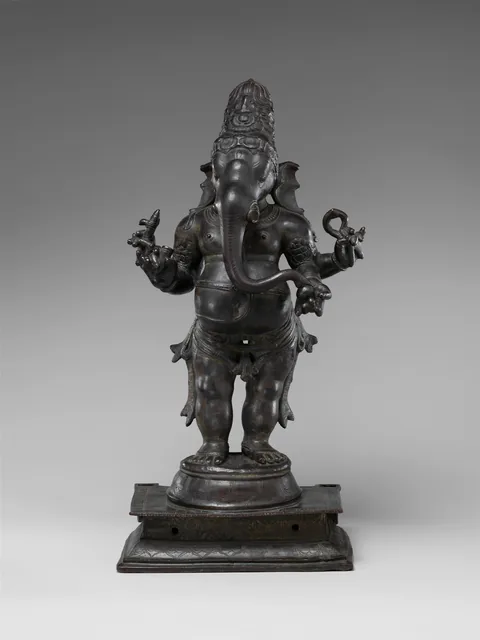
The opening praises Ganesha as a giver of joy and remover of sorrow and obstacles. The following images describe vermilion, pearls, sandalwood, a crown and anklets. The refrain celebrates his auspicious presence. The closing voice waits for help in distress and seeks protection at life’s end.
Understand the teaching
This Marathi aarti praises Ganesha ji through a progression of vivid images and intimate appeals. The opening names the giver of joy and remover of sorrow; vermilion, pearls, a crown and anklets then make the worshipped form present in song. Gaurikumara recalls his relationship with Maa Gauri or Maa Parvati. The refrain gathers the verses into a repeated celebration of the auspicious form.
In the final stanza the voice turns to waiting and seeking refuge in difficulty and at life’s end. The signature phrase das Ramacha, servant of Rama, helps readers notice the devotional speaker within the poem. Read or sing the refrain after each stanza, then choose one image to understand. This catalogue follows the Anjur Siddhivinayak temple booklet; families and musical traditions may preserve small wording and pronunciation variants.
Words and phrases
- सुखकर्ता दुःखहर्ता (sukhakartā duḥkhahartā)
- giver of joy and remover of sorrow
- शेंदुराची उटी (śendurāchī uṭī)
- a coating of vermilion
- मुक्ताफळांची माळ (muktāphaḷāñchī māḷ)
- a garland of pearls
- गौरीकुमरा (gaurī-kumarā)
- O son of Gauri
- मंगलमूर्ती (maṅgala-mūrtī)
- auspicious form
- दास रामाचा (dās rāmāchā)
- servant of Rama
Pause and think
What changes when the refrain returns after each stanza?
See an explained answer
The new images and appeals are brought back to a shared celebration of Ganesha ji as Mangalamurti. Repetition gives the song a place for everyone to rejoin.