
Read-aloud uses a voice on your device. It reads our explanation; it is not a sung aarti or a Sanskrit pronunciation lesson.
Ganapati Atharvashirsha · Ganapati Gayatri · Chinmaya booklet, section 12, printed p. 6
The traditional text
तन्नो दन्तिः प्रचोदयात्॥
Roman reading aid
ekadantāya vidmahe vakratuṇḍāya dhīmahi |
tan no dantiḥ pracodayāt ||
Meaning in everyday language
May we come to know the one-tusked one; we meditate on the one with the curved trunk. May that tusked Lord inspire and direct us.
Understand the teaching
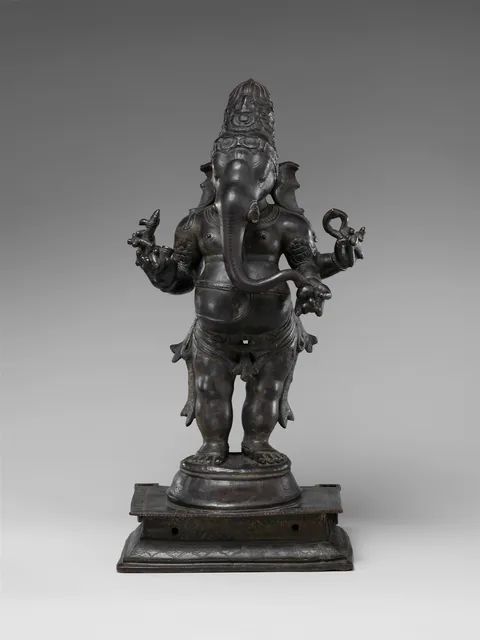
Ekadanta and Vakratunda name Ganesha through features of his sacred form. The movement from knowing to meditation and then to a request for inspiration gives the brief mantra a complete devotional arc. This is the Ganapati Gayatri found within the Atharvashirsha tradition. It is distinct from the Savitri Gayatri beginning tat savitur varenyam.
The plural forms invite a shared voice: we know, we meditate, guide us. A person may read the mantra quietly and reflect on the quality of understanding sought before beginning a task. The written aid omits Vedic accent and melody; a living recitation tradition can teach those features. The short text should be named as a mantra, not counted as a two-line Gita shloka.
Words and phrases
- एकदन्ताय (ekadantāya)
- to the one-tusked one
- विद्महे (vidmahe)
- may we know
- वक्रतुण्डाय धीमहि (vakratuṇḍāya dhīmahi)
- we meditate on the curved-trunked one
- दन्तिः (dantiḥ)
- the tusked one
- प्रचोदयात् (pracodayāt)
- may inspire or direct
Pause and think
What kind of guidance might you seek before beginning a difficult task?
See an explained answer
I might seek clarity about the purpose, patience with difficulty and understanding that helps others as well as myself. I can then choose one careful first step.