
The core idea
Chapter 16 contrasts daivi and asuri dispositions, traces the destructive logic of possessiveness, and concludes by directing Arjuna toward scriptural guidance in deciding what to do.
Begin with the qualities to cultivate
Verses 16.1–3 begin with a collection of qualities rather than a story of defeating an external enemy. Fearlessness, truth, restraint, generosity, compassion and freedom from exaggerated self-importance belong to the daivi disposition described here. Verse 16.5 connects this disposition with liberation. The religious purpose is therefore larger than becoming socially impressive: it concerns the direction of a person’s life. Notice that firmness and gentleness appear in the same opening passage; the list does not require confusing care with passivity.
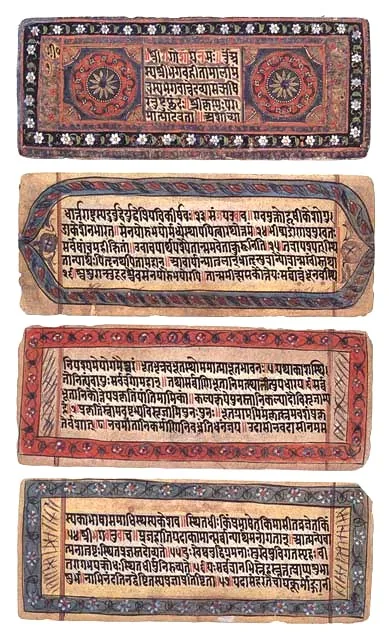

Sources: Bhagavad Gita 16.1–3: text and A. C. Bhaktivedanta Swami Prabhupada’s devotional commentary ↗ · Bhagavad Gita chapter 16: text and A. C. Bhaktivedanta Swami Prabhupada’s devotional commentary ↗
Read the opposing direction as a pattern
The chapter next describes pride, harshness and ignorance, then a life without a reliable sense of what should or should not be done. In 16.10, desire is difficult to satisfy and is joined by self-display and conceit. This is a developing pattern: the appetite for enjoyment recruits reasons to defend itself. Reading the sequence matters because an isolated label tells us less than the habits, reasoning and actions the passage actually describes.
Sources: Bhagavad Gita 16.10: text and A. C. Bhaktivedanta Swami Prabhupada’s devotional commentary ↗ · Bhagavad Gita chapter 16: text and A. C. Bhaktivedanta Swami Prabhupada’s devotional commentary ↗
Listen to the inner speech in 16.13–15
The speaker imagined in these verses counts possessions, anticipates more wealth, boasts about defeating enemies and compares status with others. Even sacrifice and giving enter this self-congratulating account. The contrast is not simply between someone who gives and someone who never gives. It asks what meaning an action acquires when surrounded by the conviction that everything confirms one’s superiority. Follow the repeated movement towards “I” and “mine” before drawing your own application.
Sources: Bhagavad Gita 16.13–15: text and A. C. Bhaktivedanta Swami Prabhupada’s devotional commentary ↗
Identify the three gates
Verse 16.21 names kama, krodha and lobha—desire, anger and greed—as three destructive gates. The image joins an inward tendency to a direction of movement. In this chapter these tendencies obstruct the person’s spiritual good; the verse is not merely a technique for feeling calm. To read carefully, identify which word is present in the Sanskrit before replacing the three with a general word such as negativity. Their distinctness makes reflection more precise.
Sources: Bhagavad Gita 16.21: text and A. C. Bhaktivedanta Swami Prabhupada’s devotional commentary ↗
Why does the chapter end with shastra?
Verses 16.23–24 turn from unchecked desire towards shastra as a reference for deciding what is to be done. The conclusion belongs to the Gita’s sacred teaching relationship between Krishna and Arjuna. It does not present personal impulse as its own sufficient authority. A reader should therefore preserve the actual closing question—how action is guided—rather than extracting the opening virtue list as though the chapter had no religious setting.
Sources: Bhagavad Gita 16.24: text and A. C. Bhaktivedanta Swami Prabhupada’s devotional commentary ↗
Original example: credit for a shared effort
Original learning example: a volunteer organises a successful event and begins speaking as though nobody else contributed. When another volunteer requests an accurate credit list, the organiser becomes angry and threatens to exclude them. First name the actions you can observe: concealing others’ work, reacting with hostility and seeking exclusive recognition. Next compare these observations with the chapter’s vocabulary. Finally propose a repair: acknowledge contributions, correct the record and reconsider the desire behind the reaction. This example is a tool for self-examination, not a claim that the volunteer is an asura or that the Gita narrated this event.
PUT IT INTO PRACTICE
Read the chapter through a decision
- Read 16.1–5 and choose two qualities whose meanings you need to investigate.
- Compare the imagined self-description in 16.13–15 with the three gates in 16.21.
- Read 16.24 and write what kind of guidance concludes the chapter.
- Use the worked example to name one observable action and one possible repair, without assigning a spiritual identity to another person.
Check your understanding
Why read the opening list before the warning?
It establishes the qualities and spiritual direction against which the later pattern is contrasted. The chapter is not only a catalogue of faults.
Can giving alone prove the disposition described is divine?
No. The boastful speaker in 16.13–15 also mentions giving. Context, intention and the surrounding conduct matter to the contrast.
Name the three gates without collapsing them into one feeling.
Kama, krodha and lobha: desire, anger and greed. Distinguishing them helps identify what is actually happening.
What does the volunteer example add to the text?
It supplies an invented situation for applying the vocabulary. It does not add a new scriptural event or authorise labelling the person an asura.