
The core idea
Ganesh Chaturthi celebrates Ganapati’s auspicious presence through household and community worship. Its actions gain depth when their relationships are understood: welcome expresses devotion, offerings express care, prasad is received with gratitude, and farewell carries affection and the hope of return.
A lunar day becomes a season of welcome
Chaturthi means the fourth lunar day. The familiar Bhadrapada Ganesh Chaturthi is observed in the bright fortnight; BAPS’s description names Bhadra Sud 4 and describes Maharashtra worship continuing to Sud 14, associated with Anant Chaturdashi. The image is welcomed into a household or public setting, receives worship, and is later taken in farewell. The duration and arrangement depend on the community’s tradition. The Siddhivinayak Trust separately lists Vinayaki Chaturthi, Sankashti Chaturthi, Maghi Ganesh Jayanti and Bhadrapad Ganesh Chaturthi. Those names show that Ganapati’s calendar includes recurring observance as well as large seasonal celebrations. For a learner, this changes the festival from an isolated date into a rhythm of returning attention. One celebration may be expansive, with neighbours and visitors; another remembrance may take place quietly at home. Both can be understood through the same question: how are people making time to welcome, honour and remember Ganapati?
Sources: BAPS Swaminarayan Sanstha: Ganesh Chaturthi ↗ · Shree Siddhivinayak Ganapati Mandir Trust: temple schedule ↗
Why the story ends in celebration
The Shiva Purana’s Kumara-khanda 18 gives a powerful narrative setting for worship. Ganapati has been restored to life. Parvati embraces and adorns him, Shiva acknowledges him as his son, and the gods establish his honoured place. Flowers, fragrance, food, lamps, praise, music and dance belong to the atmosphere of recognition. The boy who stood at a disputed doorway is now welcomed by the divine assembly. Remembering this scene can give a festival’s welcome emotional depth: people celebrate a beloved presence with affection and public honour. This chapter also describes Chaturthi vows and worship. Its verse 35 names a dark-fortnight setting in the Sanskrit text read here, while the familiar Bhadrapada festival is observed in the bright fortnight. The continuing traditions of worship preserve different calendrical associations. We can appreciate the chapter’s actual setting and the living festival’s calendar together, while following its central movement from sorrow and separation towards restored joy and shared celebration.

Sources: Shiva Purana, Rudra-samhita, Kumara-khanda: Sanskrit, chapters 13–20 ↗ · BAPS Swaminarayan Sanstha: Ganesh Chaturthi ↗
Preparing a place and offering attention
Imagine a household preparing for Ganapati’s welcome. Someone cleans a place, another arranges flowers, and a child asks where the murti will sit. This learning scene illustrates a simple idea: welcome begins before the guests arrive, because preparation gives affection a visible form. In worship, sthapana refers to establishing the image in its prepared place; avahana is invocation, the devotional welcome of the deity. Puja then offers a sequence of upacharas, acts of attendance and honour. The Purana’s chapter names materials such as flowers, sandalwood, durva, lamps and food, and it describes images in several materials, including clay. The materials are encountered through a relationship: fragrance and flowers honour, a lamp illuminates, food is offered with care. Different households inherit different sequences. A learner can ask an elder to explain one action and then help with it. Carrying flowers carefully or arranging a clean seat becomes more meaningful when one knows what is being welcomed.
Sources: Shiva Purana, Rudra-samhita, Kumara-khanda: Sanskrit, chapters 13–20 ↗
Aarti, darshan and attentive listening
As people gather, worship may become audible through aarti, bhajan or a recited prayer. Aarti centres on honouring the deity with light and praise; a familiar song allows many voices to participate together. Darshan is the reverent encounter with the deity’s form. Abhisheka, where performed, is ceremonial bathing. These words identify different actions within worship, and learning them makes a temple visit easier to understand. A song can carry a narrative, describe Ganapati’s adornment or ask for protection. Listen for its movement, and let the repeated refrain become a point of shared attention. The Atharvashirsha offers a related lesson by asking protection for both speaker and listener. A person who listens quietly can therefore participate meaningfully alongside someone who knows the whole chant. One useful family activity is to explain the meaning of a refrain before singing it. The next repetition then carries an understood relationship, and children can hear how melody and meaning support one another.
Sources: Ganapati Atharvashirsha: Sanskrit text (with separate modern gloss) ↗ · Shiva Purana, Rudra-samhita, Kumara-khanda: Sanskrit, chapters 13–20 ↗
From naivedya to prasad
Food makes the festival tangible. Naivedya is food presented to the deity; prasad is received as grace and shared after offering. The change is one of relationship: what has been prepared and given is received with gratitude. Modaka is strongly associated with Ganapati, and the Atharvashirsha’s concluding ritual passages explicitly mention offerings of modakas and durva. Households may prepare different sweets according to their region and custom. The important learning opportunity is to connect the food with the care behind it. Who prepared it? Who offered it? Who will receive a share? Imagine a child eager to take the largest sweet. A gentle explanation can show why waiting and leaving enough for others belong to the same celebration as offering the first portion. This reflection on sharing places attention on care and generosity. A small, thoughtfully offered and generously shared preparation can teach gratitude, patience and attention to the people beside us.
Sources: Ganapati Atharvashirsha: Sanskrit text (with separate modern gloss) ↗
A mandal can make care public
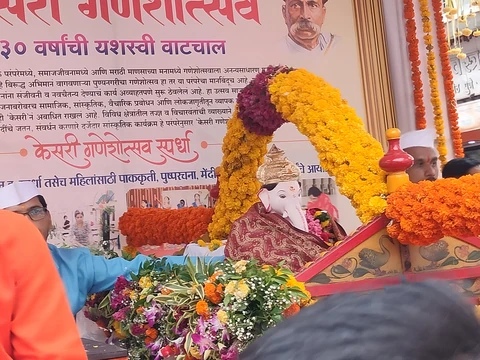
A community celebration gives many people a role: artists shape and decorate, singers lead, volunteers receive visitors, cooks prepare food and neighbours maintain the place. The task of welcoming Ganapati can become a practice of welcoming one another. The Siddhivinayak Trust’s own activity page places religious and cultural programmes beside educational work, a book bank, medical assistance and environmental initiatives including composting floral waste. This provides a concrete institutional example of devotion expressed through service. For a local group, useful questions are close at hand: can an older visitor sit, can a child follow the story, and can everyone find the place where food is shared? These are original planning questions inspired by the idea of care. A festival’s beauty includes the skill of its makers and the experience of its guests. Thanking cleaners, cooks, artists and volunteers makes often-unseen service visible. Their contributions give the celebration its daily continuity between the more dramatic moments of aarti and procession.
Sources: Shree Siddhivinayak Ganapati Mandir Trust: temple activities ↗
Visarjan: affection at the time of parting
The celebration eventually reaches farewell. In widespread festival practice, the murti is carried in a procession and immersed; this is commonly called Ganesh Visarjan. Families and communities follow their own customary duration. The Purana’s worship chapter also speaks of a concluding dismissal with an intention of return. That textual idea gives us a useful focus for understanding the emotion of farewell: the honoured period has an ending, and affection continues beyond it. For devotees, taking leave does not confine Ganapati to the material image or make remembrance disappear. The welcome has changed the rhythm of days; its teaching can continue in truthful work, generosity and gratitude. A community may arrange an appropriate local immersion setting and attend to the site afterwards as part of its care. Returning home, a learner can recall one line, one story and one act of service from the celebration. Farewell then becomes a transition from visible festival activity into remembered relationship.
A festival understood as a relationship
- Prepare and welcomeMake a place; understand who is being honoured
- Attend and praiseOfferings, darshan, aarti and listening
- Receive and shareNaivedya is offered; prasad is shared
- Take leave with affectionVisarjan closes the festival period
- Carry remembrance forwardOne understood prayer and one continuing act of care
Sources: BAPS Swaminarayan Sanstha: Ganesh Chaturthi ↗ · Shiva Purana, Rudra-samhita, Kumara-khanda: Sanskrit, chapters 13–20 ↗
Three worked festival practices
Practice 1 — A family wants children to understand the welcome. Model plan: tell the scene in which Parvati and the gods honour the restored Ganapati, explain the flower offering, and let each child help with one small preparation. The narrative, meaning and action now support each other.
Practice 2 — A learner confuses naivedya, prasad and aarti. Model answer: naivedya is food offered; prasad is graciously received and shared; aarti is an act of light and praise. Place each word beside an observed action. Learning vocabulary from the sequence makes it easier to remember than memorising definitions alone.
Practice 3 — After the festival, a group chooses one continuing act of care. Model choice: maintain a shared reading corner and thank the volunteers who organised the celebration. The act grows naturally from the festival’s attention to learning, welcome and service. It gives remembrance somewhere to live in the coming weeks.
PUT IT INTO PRACTICE
Try three connected practices
- Choose one festival action and explain what relationship it expresses.
- Ask a family member or temple volunteer about one local custom and write the explanation in your own words.
- Plan one helpful role during the celebration and one act of care after it.
Check your understanding
Is Chaturthi only an annual festival name?
Chaturthi is a lunar-day name. Ganapati worship includes recurring Chaturthi observances as well as the major Bhadrapada festival and other celebrations.
What makes an offering meaningful?
Understanding, care and the relationship expressed through it. A flower, food or a song can carry attentive devotion in a household’s own custom.
How does service belong to the festival?
The welcome of a divine presence can shape how people welcome guests, share food, support learning and care for their surroundings.
What can remain after visarjan?
Affection, understood prayer, remembered stories and useful habits of care. The festival’s visible form ends while these relationships continue.