
The core idea
Chapter 2 connects knowledge of the enduring Self with disciplined action and the steadiness of a person whose understanding is established.
2.7: Arjuna becomes a student
Arjuna acknowledges confusion about dharma and asks Krishna to teach what is truly good. This is a change in the dialogue: he no longer presents only his argument against battle. He accepts the need to learn. The request gives the following instruction its setting. Krishna addresses a person asking for clarity about action and life, so the teaching should be read as a sustained response rather than a collection of convenient quotations.
2.20: the Self is not the perishing body
Krishna teaches that the Self is not born and does not die when the body is destroyed. This is a claim about atman within the Gita’s spiritual teaching, not a statement that bodily suffering is unreal to the person experiencing it. The distinction changes the basis from which Arjuna considers mortality. Read it alongside the chapter’s ethical instruction: knowledge is not supplied as an excuse to become careless towards embodied life.
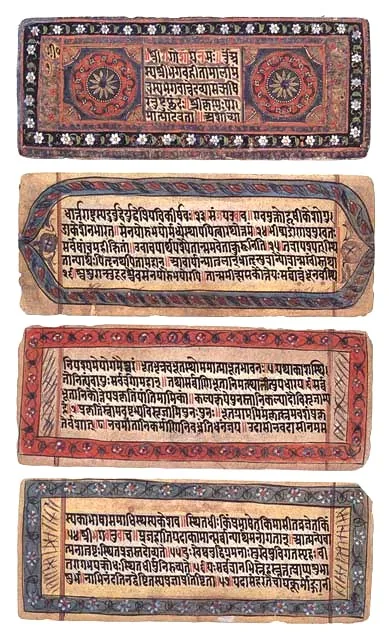

2.31: identify the particular responsibility
Krishna also addresses Arjuna’s svadharma as a kshatriya in this conflict. The appeal is to a particular role and a battle described as righteous, not a command that every reader should imitate battlefield conduct. Notice that the chapter reasons through more than one register: enduring Self and situated duty. A modern application first needs to identify its own responsibilities; it cannot simply borrow Arjuna’s role.
2.47–48: act without possessing the fruit
The instruction joins action, release of attachment to its fruit and resistance to inaction. The following verse calls evenness in success and failure yoga. Planning is therefore not replaced by indifference. The learner examines how to act while loosening the demand to control every outcome. Read both verses together: omitting the warning about inaction can turn detachment into a justification for abandoning the work.
Sources: IIT Kanpur Gita Supersite: Bhagavad Gita 2.47 ↗ · IIT Kanpur Gita Supersite: Bhagavad Gita 2.48 ↗
2.55 onward: steady wisdom is lived
Arjuna asks about the person of established understanding. Krishna begins with release of desires arising in the mind and satisfaction in the Self, then develops a portrait involving steadiness and sense discipline. The answer concerns an orientation of life, not simply a calm facial expression. The chapter has moved from the crisis of a confused learner to the qualities of transformed understanding. That portrait supplies a direction for the practices developed later.
Original example: prepare without demanding certainty
A learner prepares carefully for an interview but cannot guarantee selection. She can research the role, practise clear answers and arrive on time; she can also review mistakes afterwards. This original example illuminates the action-and-fruit distinction. It does not demonstrate the teaching about the eternal Self or prove that disappointment must disappear. Explain exactly which part of the chapter the example helps you understand, then return to the larger spiritual argument.
PUT IT INTO PRACTICE
Read, reconstruct and explain the chapter
- Draw a five-step map: request for teaching, Self, role, action and steady wisdom.
- Read 2.47 and 2.48 together and explain why neither careless work nor avoidance follows.
- Name one limit of the interview example and one question to revisit in the source.
Check your understanding
What changes at 2.7?
Arjuna asks to be taught as a disciple. His acknowledged uncertainty opens the instructional dialogue.
Is the atman teaching a biological claim?
It is the Gita’s spiritual distinction between Self and changing body. Do not turn it into a claim that embodied beings never suffer.
Why must 2.47 include its final instruction?
It rejects attachment to inaction. Without it, release of fruit can be mistaken for permission to avoid responsibility.
Does appearing relaxed establish steady wisdom?
No. The portrait concerns desire, understanding and discipline. A surface appearance alone cannot establish those qualities.