
FREE LEARNING SERIES
Sacred spaces, music and poetry
Learn to read a temple plan, follow musical structure and connect devotional poetry with its languages and communities.
3 lessons · Learn at your own pace
Begin the first lesson →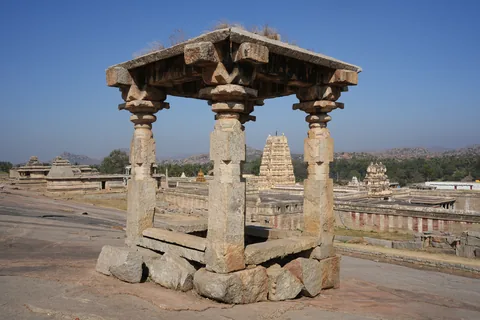

Learn, practise, explain
Try the exercise before reading its explanation. Answer the self-check questions in your own words, then compare your reasoning with the answers. Revisit any difficult section before moving on. No account or payment is needed.
- 01
Indian temple architecture: reading plans and forms
A temple can be read as an arrangement of spaces, a structure assembled or carved by skilled workers, and a place carrying sacred meanings. Comparing these layers explains more than memorising the name of a style.
Learning outcome: Interpret a simple temple plan, compare sanctum towers and gateways, and support a stylistic judgment with several visible features.
Open lesson → - 02
Indian music: raga, tala and attentive listening
A listener need not identify every raga to hear musical decisions. Start with what remains stable and what changes: a tonal reference, the shape of a phrase, a recurring rhythmic cycle and the performer’s choices within it.
Learning outcome: Explain why a raga exceeds its scale, count teental accurately, and distinguish tempo, note density and rhythmic position.
Open lesson → - 03
Bhakti poetry: languages, images and community
Devotional poetry can make a philosophical relationship feel immediate: a speaker calls, waits, complains, remembers or surrenders. To understand its force, read the words, the voice addressing the divine, and the communities through which the poem is sung and remembered.
Learning outcome: Analyse a devotional image, distinguish speaker from historical author, and explain how performance can create shared memory without assuming identical beliefs.
Open lesson →