
FREE LEARNING SERIES
Epics, festivals and living worship
Follow decisions in the epics, regional celebrations and the meaning of temple worship.
4 lessons · Learn at your own pace
Begin the first lesson →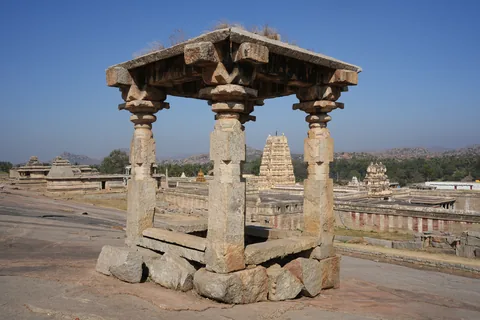

Learn, practise, explain
Try the exercise before reading its explanation. Answer the self-check questions in your own words, then compare your reasoning with the answers. Revisit any difficult section before moving on. No account or payment is needed.
- 01
Duty and leadership in the Valmiki Ramayana
The Ramayana teaches through decisions that affect families, kingdoms, allies and people seeking protection. Bharata's stewardship, Rama's questions and Hanuman's careful speech show several forms of responsible leadership.
Learning outcome: Analyse three leadership decisions in named Ramayana passages and apply their reasoning to an ordinary responsibility without treating an epic kingdom as a modern institution.
Open lesson → - 02
Dharma and difficult choices in the Mahabharata
The Mahabharata examines duty through loyalty, ambition, injustice, compassion and the cost of victory. Its difficult scenes ask a reader to give reasons for a judgment and to notice whose suffering a convenient answer overlooks.
Learning outcome: Reconstruct the reasoning of three epic decisions, distinguish explanation from excuse, and use a clear process for examining an everyday ethical dilemma.
Open lesson → - 03
Hindu festivals: sacred time, seasons and shared life
A festival can join worship, remembered sacred events, seasonal work, food, art and hospitality. Following a few celebrations closely shows why a festival is more than a date or a decorative theme.
Learning outcome: Explain the sequence and meaning of three observances, identify regional examples accurately and plan a thoughtful contribution to a family or community celebration.
Open lesson → - 04
Temples, puja and sacred space
A temple brings together a sacred image, a carefully organised place and a continuing pattern of worship. Understanding their relationship makes a visit more meaningful than simply recognising the building’s name.
Learning outcome: Recognise the main spaces of a temple, distinguish darshan, arati, naivedya and prasad, and explain a worship sequence through scripture and the example of Tirumala.
Open lesson →