
The core idea
Voters elect representatives through defined electoral systems. For general enrolment, eligibility, an accepted application and the current electoral-roll entry are separate checks. Use ECI and the relevant Chief Electoral Officer for parliamentary and assembly voter information, and the State Election Commission for local elections.
1. Which representative is being chosen?
A parliamentary constituency chooses a Lok Sabha member; an assembly constituency chooses a member of the state Legislative Assembly. Local elections fill offices under the applicable local-government arrangements. These areas and responsibilities are not interchangeable. Rajya Sabha representation follows a different structure: elected members representing states are chosen by elected members of their Legislative Assemblies through proportional representation using the single transferable vote; some members are nominated under the Constitution. Citizens therefore do not cast a direct public vote for every parliamentary office. Start an information search by naming the election and office. An MP can raise national legislative and oversight issues; an MLA works in the state legislature; a local representative serves within the relevant local institution. A practical civic question is “Which institution has the power relevant to this issue?” Identifying that institution helps you interpret promises and locate the proper public record.
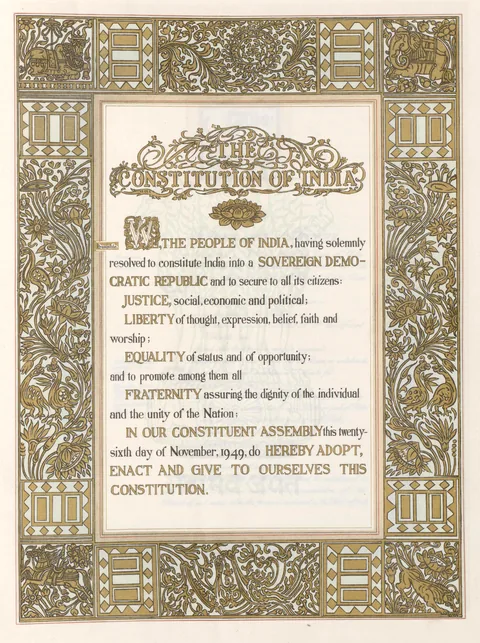

Sources: Legislative Department: Constitution of India, 2024 English–Malayalam edition (English text) ↗ · Digital Sansad: Rajya Sabha introduction ↗ · NCERT on IIT Kanpur SATHEE: Election and Representation ↗
2. Votes, seats and majority are different measures
Lok Sabha and state assembly constituency elections use the first-past-the-post system: the candidate with the largest number of votes wins the seat. Winning does not necessarily require more than half the votes cast. In a completely fictional constituency, candidate A receives 4,200 votes, B receives 3,500 and C receives 2,300. The total is 10,000, so A has 42% and the largest tally. A wins this example although 58% voted for the other candidates together. This does not mean those other votes can be combined into a different candidate’s tally. Nor can one constituency’s percentages establish the national seat distribution. Keep the units distinct: votes belong to candidates in an election; seats count elected positions. A reported seat majority and a majority of votes are different claims. Ask which one a chart shows before drawing conclusions about representation.
The largest tally can be below half
| Candidate | Votes | Share of 10,000 votes |
|---|---|---|
| A | 4200 | 42% |
| B | 3500 | 35% |
| C | 2300 | 23% |
A wins the seat with the largest vote total: 42%. A does not have more than half the votes.
Sources: NCERT on IIT Kanpur SATHEE: Election and Representation ↗ · Chief Electoral Officer Delhi: electoral system and the electoral roll ↗
3. Eligibility, application and enrolment are separate
For general voter registration, the official guidance requires Indian citizenship, the qualifying age of eighteen and ordinary residence in the area, subject to legal disqualifications. The four age-qualifying dates are 1 January, 1 April, 1 July and 1 October. These are not a promise that every application is approved on a birthday or by a fixed deadline. Form 6 is the application for a new voter; Form 8 covers shifting residence and specified changes for an existing elector. A person cannot be enrolled in more than one place. Read the latest form, instructions and current revision notice for the relevant area; additional declarations or procedures may apply during a particular revision. Overseas and service electors have distinct provisions. Do not copy a generic checklist into every case. An acknowledgement means an application was received; check its decision and the electoral-roll entry rather than assuming submission completes enrolment.
Sources: Chief Electoral Officer Delhi: Electoral-roll and voter-service FAQs ↗ · Election Commission of India: Form 6, official CEO Delhi copy ↗ · Election Commission of India: Form 8, official CEO Delhi copy ↗ · Chief Electoral Officer Delhi: official voter links and current notices ↗
4. Follow the official information route
Begin at the Election Commission of India and the official Chief Electoral Officer website for the relevant state or Union Territory. Their links lead to voter services, electoral-roll searches, forms and local electoral officers. The ECI voter portal uses voters.eci.gov.in; the electoral search service uses electoralsearch.eci.gov.in. Check the exact hostname, current notice, area and year rather than trusting a logo or a forwarded screenshot. For local-body elections, consult the relevant State Election Commission because its responsibilities and procedures are distinct. If an online service is unavailable, locate the official Electoral Registration Officer, Assistant Electoral Registration Officer or Booth Level Officer through the official directory. Use only the channel appropriate to your case. PLS Foundation is an independent free learning platform: it does not register voters, decide eligibility or issue voter cards. Practise with fictional details; do not place identity numbers or personal documents in a classroom worksheet.
Sources: Chief Electoral Officer Delhi: official voter links and current notices ↗ · Chief Electoral Officer Delhi: Electoral-roll and voter-service FAQs ↗ · Legislative Department: Constitution of India, 2024 English–Malayalam edition (English text) ↗
5. Verify the roll and the notice, not just the card
An Electors Photo Identity Card, often called EPIC, and the current electoral-roll entry answer different questions. Having a card is not a substitute for being on the relevant roll. Well before a relevant election, check the latest official roll information and the applicable election notice; confirm your details, constituency and polling information through official services. A single unsuccessful search is a reason to seek clarification, not proof of permanent ineligibility. Check spelling, search method and the correct area, then contact the electoral authorities if the issue remains. Use the current instructions for correction, inclusion or an appeal as applicable. Do not rely on a claim that any missing name can be added at the polling station on polling day. Registration and election procedures have rules and cut-offs, so consult the current official notice rather than an undated message or a deadline borrowed from another state.
Sources: Chief Electoral Officer Delhi: electoral system and the electoral roll ↗ · Chief Electoral Officer Delhi: Electoral-roll and voter-service FAQs ↗ · Chief Electoral Officer Delhi: official voter links and current notices ↗
6. Worked example: verify an address-change claim
In this fictional example, an already enrolled voter moves to a new ordinary residence and sees a forwarded message saying “Apply as a brand-new voter again and keep both registrations.” She checks the official forms page and finds the residence-shifting route under Form 8. She reads the current instructions for her area and asks the official electoral office about any unclear document requirement. She keeps the application reference, follows the official status process and later verifies the resulting roll entry. The lesson does not assume automatic approval or a universal processing time. Separately, a learner comparing public statements by representatives records each statement’s date, source, relevant office and supporting evidence. The same questions apply to every party and candidate. A verified fact, a promise and an opinion should remain separate. Civic literacy equips people to understand institutions and records while leaving their political choices to them.
Sources: Election Commission of India: Form 8, official CEO Delhi copy ↗ · Chief Electoral Officer Delhi: Electoral-roll and voter-service FAQs ↗ · Chief Electoral Officer Delhi: official voter links and current notices ↗
PUT IT INTO PRACTICE
Create a voter-information checklist without personal data
- Name a fictional election as parliamentary, assembly or local. Identify the relevant election authority and representative’s institution.
- For the fictional 4,200/3,500/2,300 result, calculate the winner’s share and explain why the winning seat is not proof of more than 50% of votes.
- List the checks for an address change: current official instructions, appropriate form, acknowledgement, decision and roll verification. Use invented labels only.
Check your understanding
Do voters directly elect every Rajya Sabha member?
No. State representatives are indirectly elected by elected MLAs under the constitutional system, and some members are nominated. This differs from a Lok Sabha constituency election.
Who wins the fictional 4,200/3,500/2,300 election?
A wins with the largest tally: 4,200 of 10,000 votes, or 42%. First-past-the-post does not require an absolute majority in this example.
Is an application reference proof of completed enrolment?
No. Check the application decision and current electoral-roll entry. A receipt or status acknowledgement is a different stage.
Which form generally covers shifting an existing elector’s residence?
Form 8. Read the latest official form and local revision instructions, and avoid duplicate enrolment. Unclear cases should go to the relevant electoral officer.