
The core idea
Choose a reader and purpose, state one controlling point, develop it with relevant details, and revise meaning before polishing spelling. The improved version should make the intended action easier to understand.
1. Give the paragraph one main job
A paragraph groups related sentences around a central point. Supporting sentences explain that point through details, examples or reasons. Beginning with the main point is a useful option for a practical request. Order the remaining sentences so the reader can follow the relationship. The Australian Government Style Manual recommends a clear topic and logical sequence; this is writing guidance, not a rule requiring every paragraph to contain a fixed number of sentences.
2. Turn notes into a plan
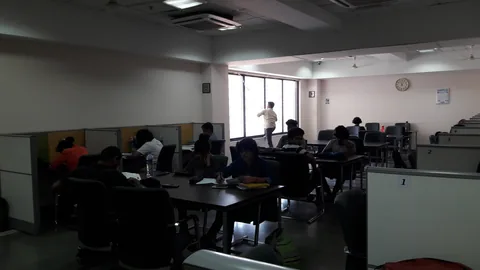
Imagine these fictional notes: study room; timetable changes; messages spread orally; three learners missed a changed-time message and arrived after the session ended; unused wall; volunteer can update a board; neighbour paints beautiful signs. Your reader is the room coordinator. Your purpose is to request one reliable place for notices. Choose a main point: “Please put a timetable board near the study-room entrance.” Keep the missed session as evidence of a communication problem. Keep the unused wall and volunteer as practical details. Leave the neighbour’s artistic skill aside unless you are proposing who will make the board. Arrange the paragraph as request, problem, workable proposal. Planning means choosing relationships, not simply copying every note into a sentence.

3. Compare a draft and a useful revision
Before: “Our room is very good. Notices are a problem and it is important. Last Tuesday three learners came after the session ended. My neighbour paints signs. Everyone is always confused. A board should be there. Volunteers are helpful.” The draft has a relevant example, but “it” and “there” are vague, and “everyone always” exceeds the evidence.
After: “Please place a timetable board beside the study-room entrance. Last Tuesday, three learners arrived after the session had ended because they had not heard about the changed time. A board on the unused wall could display the date and the latest session times. One volunteer could check it before each session. This would give visitors a clear place to check the timetable.” The missed message was included in the planning notes. In a real request, check such a detail before presenting it as the cause. The revised proposal uses “could”, because approval and staffing are not yet settled.
The job of each sentence
| Sentence | Function | Revision check |
|---|---|---|
| 1 | Request a board | Is the action specific? |
| 2 | Explain the need | Is the example supported? |
| 3–4 | Propose an arrangement | Is it feasible, or still to check? |
| 5 | State expected benefit | Does it follow from the proposal? |
4. Make each link visible
Trace the revised paragraph. Sentence one requests the board. Sentence two explains the need. Sentences three and four show how the proposal could work. Sentence five states the expected benefit. “Because” introduces a reason; “before” gives order. These connectors must match the facts. Do not add “therefore” where the conclusion does not follow. Compare “Meena told Farah that she would update the board.” Who is “she”? Repair it as “Meena told Farah, ‘I will update the board’” if Meena means herself, or “Meena told Farah that Farah would update the board” if the intended updater is Farah. These are different meanings. Revision requires choosing the correct one, not merely replacing a short word with a longer word.
5. Check order, then sentence accuracy
Editing includes checking sentence order and grammatical agreement. NIOS teaches both through examples of self-editing. Make separate passes: first test whether ideas are in a sensible sequence; then check tense, agreement, spelling and punctuation. Reading the draft again after a short pause can make an unclear connection easier to notice. A correct spelling does not repair an unsupported statement or a missing explanation.
Sources: NIOS English 302, Lesson 16: self-editing, pp. 147–149 ↗
6. Repair language while protecting meaning
English practice: “The volunteers checks the board every mornings.” Change it to “The volunteers check the board every morning.” The plural subject takes “check”; “every” is followed here by singular “morning”. Now inspect “Yesterday they check the board”: use “checked” for this completed past action. Hindi practice has its own checks. “नई सूचना लिखे हैं” becomes “नई सूचना लिखी है”; “सूचना” is feminine singular. If several notices are meant, write “नई सूचनाएँ लिखी हैं”. Do not mechanically transfer English word order or articles into Hindi. For either version, ask a reader to restate the requested action. If they understand “buy books” when you intended “display times”, revise the message before declaring it finished. A reader’s accurate restatement is a useful check of clarity.
PUT IT INTO PRACTICE
Practice: revise with reasons
- Draft: “The board is useful. It is old. Put dates on notices. Last week two undated notices showed different times.” Choose the central request. Answer: put dates on notices so readers can identify the current time.
- Write a revision. Model: “Please date every timetable notice. Last week, two undated notices showed different times. Removing outdated notices would help readers find the current schedule.” The old board’s age is irrelevant unless its condition affects use.
- Repair “These notice is current” or “ये सूचना नई हैं”. Answers: “These notices are current”; “ये सूचनाएँ नई हैं”. Both repairs preserve the intended plural meaning.
Check your understanding
Must every paragraph have five sentences?
No. Use enough relevant development for its purpose. A fixed count can produce repetition or leave essential information out.
What is the first revision priority?
Check the intended point, relevant support and order. Polished punctuation cannot make an unrelated paragraph coherent.
Can I invent evidence to strengthen a real request?
No. Use observed details or label a hypothetical example. The fictional numbers here are for practice only.
Why retain “could” in a proposal?
It marks a possible arrangement. Writing “will” would suggest a commitment that has not yet been made.